Water damage restoration built around Mt. Juliet homes
24/7 water damage restoration for Mount Juliet and western Wilson County: the restoration team extracts standing water, dries the structure to the IICRC S500 standard and documents every step for the insurance claim.
Why the work is done the way it is
Mt. Juliet grew fast. Most homes here went up after 2000, many on crawl spaces or concrete slabs, with laundry rooms upstairs, water heaters in garages and supply hoses behind every appliance. The ground under them is thin soil over limestone, and the weather swings from spring downpours to the occasional hard freeze. Water damage here has its own patterns, and the drying plan follows them.
That is why every job starts with moisture mapping, why the crawl space gets checked on a main-floor leak, and why equipment stays until the readings say dry. The restoration team follows the IICRC S500 drying standard from the first reading to the last, and builds the file an adjuster needs as the work happens.
What gets handled
Water and sewage only: water extraction, crawl space water damage, burst pipes, slab leaks, ceiling and roof leaks, storm flooding, water heater, appliance and toilet leaks, sewage backups, hardwood floors, structural drying and commercial losses.
Find us on Google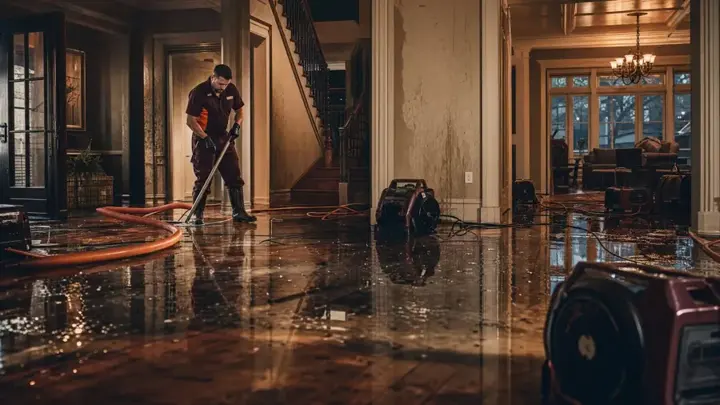
How every dry-out is held to a standard
Rapid local response
The response team answers 24/7, and active water is treated as urgent at any hour, across Mt. Juliet and the nearby towns.
IICRC S500 drying standard
Moisture mapping before equipment, equipment sized to the class of loss, and a drying goal set by a dry reference in the same house.
Claim-ready documentation
Photos before removal, the moisture map, the category and class, and daily logs until the structure reads dry.
Local water experts
Crawl spaces, slab leaks, freeze damage and creek runoff: the failure modes that dominate in western Wilson County.
Water damage in Mount Juliet?
The restoration team extracts, dries and documents, 24/7, across Mt. Juliet and the nearby towns.