Crawl Space Water Damage in Mount Juliet, TN
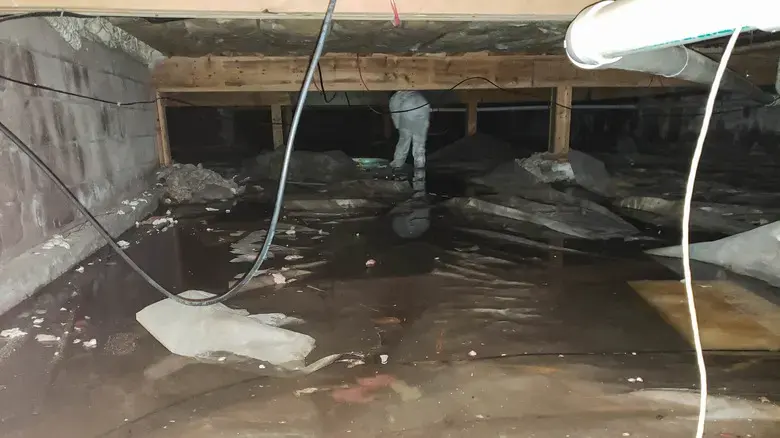
Rock sits close to the surface across Wilson County, so heavy rain runs sideways toward foundations instead of soaking in, and a lot of it ends up in crawl spaces. The mitigation team pumps out the water, pulls the soaked vapor barrier and dries the joists and subfloor before the floor above starts to suffer.
(888) 849-5796Water under the house? Call now- 24/7 dispatch
- Crawl space pump-out
- Vapor barrier removal
- Joist moisture readings
If you find water in the crawl space
- 1
Stay out of the water
Do not crawl into standing water near wiring, the HVAC unit or a water heater. Shut off power to the unit if the panel is dry.
- 2
Find the source
Rain runoff, a broken supply line or a sewer line each need a different response. Note what you see and smell.
- 3
Shut the main if it is a pipe
A supply leak under the house keeps running until the main is closed.
- 4
Photograph from the hatch
Photos from the access door help the claim and the crew plan the job.
Water under the house becomes humidity in the house
A wet crawl space pushes moisture up into subfloor, insulation and ductwork. Floors cup, rooms smell musty and the problem grows each week it is left.
- Water category
- Category 1 from a supply leak, Category 3 from runoff or sewer
- Typical class
- Class 2 to 4: soil, framing, insulation and subfloor
- Equipment
- Submersible pumps, LGR dehumidifiers, air movers, pin meters on joists
- Drying goal
- Joists and subfloor within 2 to 4 points of dry framing elsewhere
Crawl spaces are the market service in Mount Juliet for a reason. Middle Tennessee builds on crawl spaces and slabs far more than on full basements, and across Wilson County the soil is thin over limestone. During heavy rain, water that cannot soak into the ground runs along the rock toward the lowest point, and a crawl space is often that point. Add a supply line, a drain line and a water heater or HVAC unit under the house, and the crawl space becomes where water problems hide.
Where crawl space water comes from in Mt. Juliet
- Storm runoff after heavy spring rain, especially on lots that slope toward the house or where downspouts dump next to the foundation.
- Supply line leaks and frozen lines near open foundation vents. See burst pipe water damage.
- Drain and sewer line leaks, which are Category 3 and need sewage backup cleanup procedures.
- Condensate and ductwork sweating in humid summers, which wets insulation slowly.
Water under the floor right now?
(888) 849-5796Get the crawl space pumped outHow the mitigation team dries a crawl space
Standing water comes out first with submersible pumps. The soaked vapor barrier, the plastic sheet on the ground, holds water on top of it and usually gets pulled and bagged. Wet fiberglass insulation between the joists sags and stays wet, so it comes down. Then the mitigation team takes pin meter readings on joists, beams and the subfloor, and compares them with dry framing in another part of the house.
Drying a crawl space is mostly dehumidification. LGR dehumidifiers pull moisture out of the enclosed air while air movers push air across the framing. Foundation vents are often closed during drying so humid outside air does not undo the work. Readings are logged daily, and the equipment stays until the framing meets the drying goal. A new vapor barrier goes down only after the space is dry.
When it is contaminated water
Runoff that crossed the yard, creek overflow and anything from a drain or sewer line is Category 3. In that case the crew wears protective gear, removes contaminated insulation and barrier, and applies an EPA-registered antimicrobial to the soil surface and framing before drying. If the floor above has started to cup, see hardwood floor water damage. For storm safety before anyone goes under the house, see the Ready.gov flood page.
What does crawl space water damage cost in Mount Juliet, TN?
In Mount Juliet, TN, crawl space water damage restoration typically runs $1,500 to $7,000, depending on how much standing water there is, whether insulation and vapor barrier come out, and whether the water is clean or contaminated.
Damp, no standing water
$1,500 to $2,500
- Barrier pulled
- Dehumidification
- Framing readings
Standing water
$2,500 to $4,500
- Pump-out
- Insulation removal
- LGR drying
Contaminated water
$4,500 to $7,000+
- Category 3 protocol
- Antimicrobial
- New barrier after drying
The drivers are the water category, the crawl space square footage, how much insulation and barrier are soaked and how fast drying started. Run the numbers in the water damage cost calculator.
How crawl space water damage is handled in Mount Juliet
- 1
Pump out
Submersible pumps remove standing water from the crawl space floor.
- 2
Strip the wet materials
The soaked vapor barrier and sagging insulation are pulled and bagged.
- 3
Dehumidify
LGR dehumidifiers and air movers dry joists, beams and subfloor with vents closed.
- 4
Verify and reseal
Readings meet the dry reference, then a new vapor barrier goes down.
Coverage across Mount Juliet and western Wilson County
The Mount Juliet restoration crew works from Providence and Willoughby Station to the Old Hickory Lake shoreline and south toward Gladeville, ZIP codes 37122 and 37121, and the same drying standard applies in Hendersonville, Lebanon, La Vergne, Gallatin, Goodlettsville.
See every area servedCrawl space water damage questions in Mount Juliet
Why does my crawl space flood after heavy rain?
Across Wilson County the soil is thin over limestone, so heavy rain runs along the rock toward the lowest point instead of soaking in. Grading, downspouts and gutters decide how much of it ends up under the house.
Does the vapor barrier have to be replaced?
A barrier with water sitting on it or contaminated water under it is usually pulled. A new one goes down after the soil and framing are dry.
Can a wet crawl space damage my floors?
Yes. Moisture rising into the subfloor makes hardwood cup and vinyl plank separate, and it raises humidity in the rooms above.
Is crawl space water dangerous?
Runoff and sewer water are Category 3 and carry bacteria. The crew wears protective gear and treats the space with an EPA-registered antimicrobial before drying.
How long does crawl space drying take?
Most crawl spaces dry in three to six days with dehumidifiers running. Heavily soaked framing or soil can take longer, and readings decide when equipment leaves.
Will insurance cover crawl space water?
A sudden pipe break is often treated differently from groundwater or surface runoff, which may fall under flood coverage or be excluded. Coverage depends on your policy, so it is worth checking with your own insurer.
Water sitting under your Mt. Juliet home?
The mitigation team pumps it out, strips the wet barrier and insulation, and dries the framing until the readings match dry wood.