Water Extraction in Mount Juliet, TN
Every gallon left on the floor ends up in the drywall, the subfloor or the crawl space. The extraction crew pulls standing water with truck-mounted pumps first, then sets drying equipment to what the moisture map shows.
(888) 849-5796Standing water in Mt. Juliet? Call now- 24/7 dispatch
- Truck-mounted extraction
- Moisture mapping first
- IICRC S500 drying goal
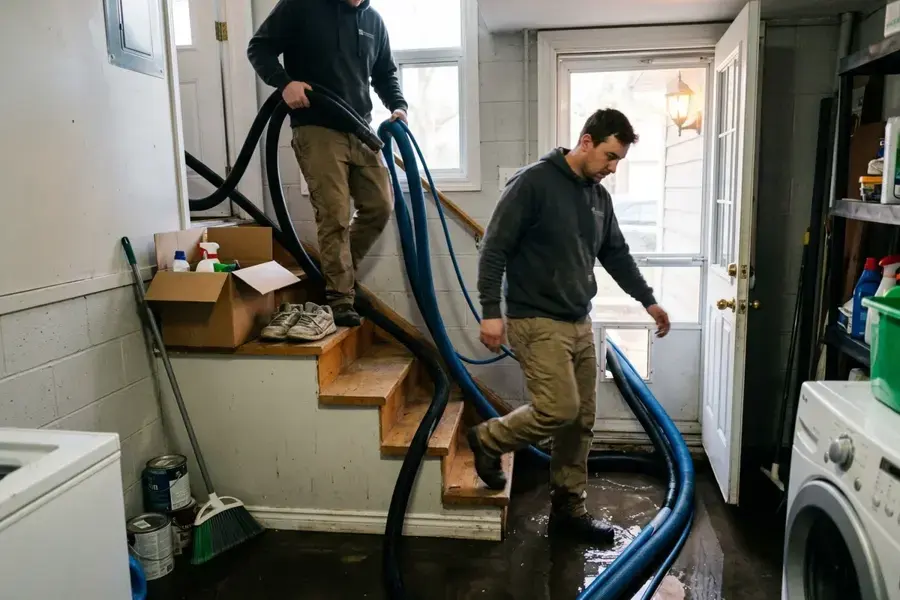
What to do while water is still on the floor
- 1
Stop the source
Close the main shutoff, usually in the garage, a utility closet or where the line enters the crawl space.
- 2
Cut power to wet rooms
Switch off breakers for flooded rooms only if the panel area is dry and you are standing on a dry floor.
- 3
Lift and photograph
Raise furniture onto blocks or foil, pull rugs off wet carpet and take photos before anything moves.
- 4
Leave the shop vac
A household vacuum cannot pull water out of carpet pad or subfloor. Truck-mounted extraction can.
Extraction is the cheapest drying there is
Removing water as liquid takes minutes. Evaporating the same water out of drywall and framing takes days of air movers and dehumidifiers. That is why the extraction crew works the floor hard before a single fan goes down.
- Water category
- Category 1 to 3, set by the source; it decides what is saved
- Typical class
- Class 2 or 3 when water reaches carpet pad, drywall or subfloor
- Equipment
- Truck-mounted extraction, weighted extraction tools, submersible pumps for deep water
- Drying goal
- Materials within 2 to 4 points of a dry reference, per IICRC S500
Most water losses in Mount Juliet start with one failure: a supply line behind a dishwasher, a water heater in the garage, a toilet upstairs, or rain that finds its way into a crawl space. What decides the size of the bill is how much water is still sitting on the floor when the extraction crew walks in. In a newer two-story home in Providence or Willoughby Station, water from a second-floor bathroom travels through the ceiling and lands on the main floor in a matter of hours.
How truck-mounted extraction works in a Mt. Juliet home
The extraction crew parks the truck, runs hose into the house and pulls water with far more suction than a portable unit. On carpet, a weighted extraction tool presses water out of the pad so the pad can often be dried in place on a Category 1 loss. On hard floors, squeegee wands move water toward the hose. When water stands deeper, for example in a crawl space after a storm, submersible pumps go in first.
- Carpet and pad: weighted extraction, then the pad is judged by category and saturation.
- Tile, vinyl plank and laminate: surface water pulled, then the readings show whether water got under the floor.
- Crawl spaces: pump out standing water, then pull the soaked vapor barrier. See crawl space water damage in Mount Juliet.
Water on the floor right now?
(888) 849-5796Get emergency water extraction startedWhy the moisture map comes before the fans
Water spreads sideways under baseboards and into wall cavities that look dry. The tech who does the walkthrough uses thermal imaging and pinless meters to mark the wet edge on every wall and floor, then sets air movers and LGR dehumidifiers to that map. Without the map, drying equipment ends up in the wrong rooms and wet framing stays wet. The map also goes into the claim file, so the adjuster sees exactly what was wet on day one.
When extraction turns into removal
Clean water from a supply line is Category 1, and most materials can be dried. Water from a washing machine or a dishwasher is Category 2. Floodwater from Stoners Creek or a sewer backup is Category 3 the moment it happens, and porous materials it touched, like carpet pad and the lower drywall, get removed instead of dried. Water that sits also degrades: a clean leak left for a couple of days can be treated as Category 2. The sewage backup cleanup process covers the contaminated side.
Once the floor is extracted, the job becomes structural drying: air movers, dehumidifiers and daily readings until the materials meet the drying goal. Mold can start growing on wet materials in 24 to 48 hours, according to the EPA mold overview, which is why extraction is treated as urgent at any hour.
What does water extraction cost in Mount Juliet, TN?
In Mount Juliet, TN, water extraction and the first round of drying typically run $450 to $4,500, depending on how many rooms are wet, whether carpet pad or crawl space water is involved, and the category of water.
One room
$450 to $1,200
- Clean water
- Hard floor or carpet
- Short equipment stay
Several rooms
$1,200 to $3,000
- Carpet and pad
- Wall bottoms checked
- Air movers and LGR
Deep or dirty water
$3,000 to $4,500+
- Crawl space pump-out
- Category 2 or 3
- Material removal
The drivers are the water category, the square footage that is wet, the materials involved and how fast extraction started. Run the numbers in the water damage cost calculator.
How water extraction is handled in Mount Juliet
- 1
Map the wet edge
Thermal imaging and meters mark how far the water traveled before anything is moved.
- 2
Extract
Truck-mounted extraction and pumps pull liquid water from floors, pad and crawl spaces.
- 3
Set the drying
Air movers and LGR dehumidifiers go in sized to the wet area and the materials.
- 4
Read daily
Readings are logged each day until materials meet the dry reference.
Coverage across Mount Juliet and western Wilson County
The Mount Juliet restoration crew works from Providence and Willoughby Station to the Old Hickory Lake shoreline and south toward Gladeville, ZIP codes 37122 and 37121, and the same drying standard applies in Hendersonville, Lebanon, La Vergne, Gallatin, Goodlettsville.
See every area servedWater extraction questions in Mount Juliet
Can I use a shop vac instead of professional extraction?
A shop vac picks up surface water, but it cannot pull water out of carpet pad, subfloor seams or the bottom of drywall. Truck-mounted extraction removes far more water in the first pass, which shortens drying and reduces what has to be torn out.
Will my carpet have to be thrown away?
On a clean water loss caught early, carpet can usually be extracted and dried in place, and the pad is judged by how saturated it is. Carpet and pad touched by Category 3 water, such as floodwater or sewage, are removed.
How much water can come from a broken supply line?
A failed supply line at normal household pressure can release hundreds of gallons in a few hours. That is why shutting the main is the first step before anything else.
Does extraction work in a crawl space?
Yes. Standing water under the house is pumped out first, then the wet vapor barrier is pulled and the joists and subfloor are dried with dehumidification.
How long does drying take after extraction?
A contained Class 1 or Class 2 loss usually dries in three to five days. Hardwood, dense subfloor and plaster take longer. Equipment comes out when the readings say dry, not on a set date.
Is extraction covered by homeowners insurance?
Sudden and accidental water, like a burst supply line, is often covered after the deductible, while rising floodwater falls under flood insurance. Coverage depends on your policy, so it is worth checking with your own insurer.
Standing water in your Mt. Juliet home?
The extraction crew pulls the water, maps the wet edge and sets drying equipment, then logs readings until the structure is dry.