Structural Drying in Mount Juliet, TN
Surface drying makes a room look finished while the framing stays wet. Structural drying goes after the water inside walls, subfloor and joists. The drying team sets equipment to the moisture map and logs readings daily until every material meets a dry reference.
(888) 849-5796Walls still wet? Call now- 24/7 dispatch
- IICRC S500 drying goal
- LGR dehumidification
- Daily psychrometric logs
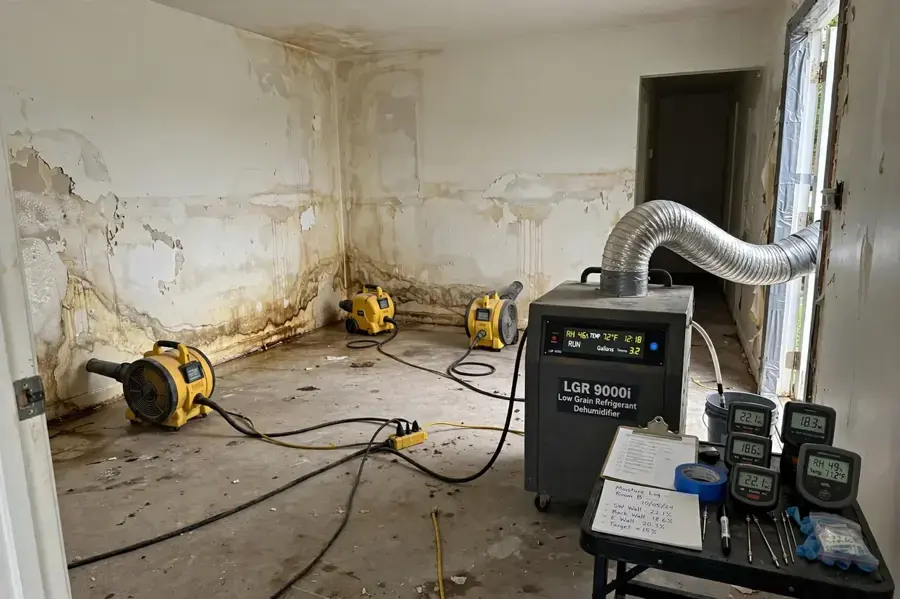
Before the drying equipment goes down
- 1
Fix the source
No drying plan works while water is still coming in. The leak, roof or drain is stopped first.
- 2
Extract first
Every gallon pulled as liquid is a gallon the dehumidifiers do not have to evaporate.
- 3
Map the moisture
Meters and thermal imaging mark what is wet, so equipment goes where the water is.
- 4
Pick a dry reference
A dry wall and floor in an unaffected room set the target the wet materials have to reach.
Structural drying, not just surface drying
Paint and carpet dry in a day. Studs, bottom plates, subfloor and joists hold water for days. The readings on those materials decide when drying is done.
- Water category
- Any; Category 3 materials are removed before drying
- Typical class
- Class 1 to 4 sets the equipment count
- Equipment
- Air movers, LGR and desiccant dehumidifiers, cavity drying, thermo-hygrometers
- Drying goal
- Wet materials within 2 to 4 points of a dry reference
Structural drying is the part of a water loss that decides whether mold, swelling and odor show up a month later. After extraction, water remains inside the materials: the bottom of drywall, the studs and bottom plates, the subfloor, the joists and, in a Mount Juliet crawl space home, the framing under the house. Structural drying removes that water in a controlled way and proves it with numbers.
How the equipment is sized
The IICRC S500 standard sorts losses by class. Class 1 is a small area with little absorbed water. Class 2 is a whole room with wet carpet and wall bottoms. Class 3 means water came from overhead and soaked walls, ceilings and insulation. Class 4 covers dense materials like hardwood, concrete and plaster that hold water tightly. The class, the room volume and the materials set how many air movers and how much dehumidification the job needs.
- Air movers move dry air across wet surfaces to speed evaporation.
- LGR (low grain refrigerant) dehumidifiers pull that moisture back out of the air.
- Desiccant dehumidifiers take over for Class 4 materials and cool conditions.
- Cavity drying pushes air into wall and cabinet spaces through small openings.
Get the drying started today
(888) 849-5796Call for structural dryingDaily readings and the drying goal
Every day, the drying team records moisture readings at marked points on the wet materials, plus temperature and humidity inside and outside the drying area. Those psychrometric readings show whether the equipment is actually pulling water out. Equipment is adjusted, added or removed based on the numbers. The goal is to bring each wet material within 2 to 4 points of a dry reference in the same building. When it gets there, the equipment leaves, and the logs go into the claim file.
Mt. Juliet conditions that change the plan
Middle Tennessee summers are humid, so outside air is rarely dry enough to help, and crawl space vents often get closed during drying. In winter, cool rooms slow evaporation and desiccant units earn their place. A typical contained loss dries in three to five days; hardwood, slab and plaster take longer. Structural drying is the second half of almost every job, from water extraction to commercial losses.
The EPA mold cleanup page explains why wet materials need to dry within 24 to 48 hours.
What does structural drying cost in Mount Juliet, TN?
In Mount Juliet, TN, structural drying typically runs $1,000 to $8,000, mostly driven by how many days equipment runs, how much equipment the class of loss needs, and how much area is wet.
Class 1 to 2
$1,000 to $2,500
- One or two rooms
- Air movers and LGR
- Three to four days
Class 3
$2,500 to $5,000
- Walls and ceilings wet
- More equipment
- Cavity drying
Class 4
$5,000 to $8,000+
- Hardwood, slab or plaster
- Desiccant units
- Longer drying
The drivers are the class of loss, the square footage, the number of equipment days and how fast drying started after the water stopped. Run the numbers in the water damage cost calculator.
How structural drying is handled in Mount Juliet
- 1
Map
Moisture mapping and a dry reference set the starting point and the goal.
- 2
Size the equipment
Air movers and dehumidifiers are set to the class of loss and room volume.
- 3
Monitor daily
Moisture and psychrometric readings are logged and equipment adjusted.
- 4
Verify dry
Equipment leaves when every material reads within 2 to 4 points of dry.
Coverage across Mount Juliet and western Wilson County
The Mount Juliet restoration crew works from Providence and Willoughby Station to the Old Hickory Lake shoreline and south toward Gladeville, ZIP codes 37122 and 37121, and the same drying standard applies in Hendersonville, Lebanon, La Vergne, Gallatin, Goodlettsville.
See every area servedStructural drying questions in Mount Juliet
What is the difference between structural drying and surface drying?
Surface drying makes paint and carpet feel dry. Structural drying removes water from inside framing, subfloor and wall cavities and proves it with daily readings.
What does IICRC S500 mean?
IICRC S500 is the industry standard for water damage restoration. It defines water categories, classes of loss, equipment sizing and the drying goal.
How long does structural drying take?
A contained loss usually dries in three to five days. Hardwood, concrete and plaster take longer. Equipment comes out when the readings say dry, not on a fixed date.
Why are my windows supposed to stay closed?
Humid Middle Tennessee air brings moisture back in. A closed drying area lets the dehumidifiers control the air.
Is the noise and power use normal?
Yes. Air movers and dehumidifiers run around the clock. The drying team sizes equipment to the job so it is not oversized.
Will insurance pay for drying equipment days?
Drying is usually part of a covered water loss, and daily logs show why each day of equipment was needed. Coverage depends on your policy, so it is worth checking with your own insurer.
Water out, but the house is still wet?
The drying team maps hidden moisture, sizes equipment to the class of loss and logs readings until the framing meets the drying goal.