Ceiling Leak Water Damage in Mount Juliet, TN
Most Mt. Juliet ceiling leaks come from inside the house: an upstairs shower pan, a toilet supply, a washer on the second floor or an attic HVAC drain. The drying team finds the source, opens the ceiling where it holds water and dries the joist bay before the drywall gives way.
(888) 849-5796Ceiling dripping? Call now- 24/7 dispatch
- Source tracing
- Safe ceiling removal
- Joist bay drying
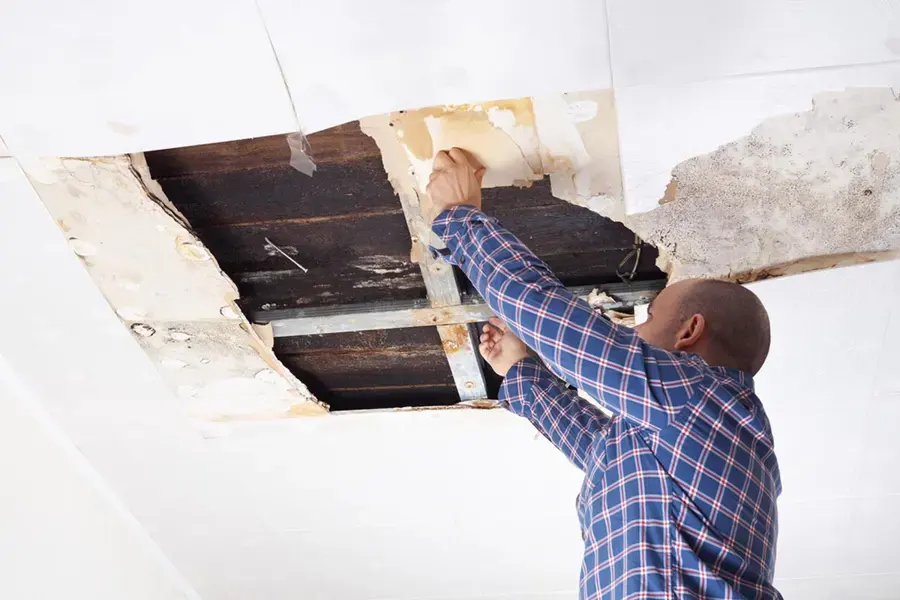
When water comes through the ceiling
- 1
Shut off the fixture or main
Close the valve on the upstairs toilet or sink, or the main if the source is unknown.
- 2
Kill the light
Switch off the breaker for the room if water is near a light fixture or fan.
- 3
Clear the room
Move furniture and rugs out and set buckets under drips.
- 4
Keep away from a bulge
A ceiling holding water can drop without warning. Keep people out from under it.
The ceiling is the floor of the room above
Water from an upstairs leak sits on top of the drywall in the joist bay, where nobody can see it. Drying the ceiling means drying that bay.
- Water category
- Category 1 from supply lines, Category 2 to 3 from drains and toilets
- Typical class
- Class 2 to 3: drywall, joists, subfloor above
- Equipment
- Thermal imaging, pinless meters, air movers, LGR dehumidifiers
- Drying goal
- Joists and subfloor within 2 to 4 points of a dry reference
A large share of Mount Juliet homes are two-story houses built after 2000, with bathrooms and laundry rooms on the second floor and HVAC units in the attic. That layout is efficient until something upstairs leaks. A failed wax ring, a cracked shower pan, a washer hose or a clogged condensate line can run for hours before a stain shows on the ceiling below. By then the joist bay above the drywall holds water.
Ceiling leak or roof leak?
A stain under a bathroom or laundry room, or one that appears when a fixture runs, points to plumbing. A stain that appears after rain points to the roof, which is covered under roof leak water damage. A stain near an attic air handler in summer points to a condensate drain. The tech who does the walkthrough uses thermal imaging to follow the cool, wet pattern back toward its source.
Water dripping from the ceiling right now?
(888) 849-5796Call before the ceiling gives wayHow the drying team opens and dries a ceiling
- Sagging or soft drywall is cut out in a controlled way, with the water caught, before it falls.
- Firm drywall that is only damp can often stay, with air directed at the ceiling and the joist bay vented.
- Wet insulation in the bay is removed.
- Joists and the subfloor above are read with meters and dried with air movers and LGR dehumidifiers.
If the leak came from a toilet, the water may be Category 2 or 3, and the ceiling material it touched is removed rather than dried. See toilet overflow cleanup. When a supply line upstairs froze and split, the work follows burst pipe water damage.
Why fast matters for ceilings
Drywall loses strength as it soaks, and wet ceiling paper is one of the first places mold appears. The EPA mold cleanup page recommends drying wet building materials within 24 to 48 hours. The drying team logs readings every day until the joists, subfloor and any remaining drywall meet the drying goal.
What does ceiling leak water damage cost in Mount Juliet, TN?
In Mount Juliet, TN, ceiling leak water damage restoration typically runs $800 to $5,000, depending on how much drywall must come out, whether insulation is wet and whether water reached the walls and floor below.
Small stain
$800 to $1,500
- Ceiling dried in place
- Source confirmed
- Short equipment stay
Opened ceiling
$1,500 to $3,000
- Drywall section removed
- Insulation out
- Joist bay dried
Two-level loss
$3,000 to $5,000+
- Ceiling, walls and floor
- Category 2 or 3
- Longer drying
The drivers are the water source and category, the amount of ceiling and insulation affected, whether flooring below got wet and how fast drying started. Run the numbers in the water damage cost calculator.
How ceiling leak water damage is handled in Mount Juliet
- 1
Stop and trace
The fixture or main is shut and thermal imaging traces the wet pattern to its source.
- 2
Open safely
Sagging drywall comes down under control and wet insulation is bagged.
- 3
Dry the bay
Air movers and LGR dehumidifiers dry the joists and subfloor above.
- 4
Verify
Readings are logged until every material meets the drying goal.
Coverage across Mount Juliet and western Wilson County
The Mount Juliet restoration crew works from Providence and Willoughby Station to the Old Hickory Lake shoreline and south toward Gladeville, ZIP codes 37122 and 37121, and the same drying standard applies in Hendersonville, Lebanon, La Vergne, Gallatin, Goodlettsville.
See every area servedCeiling leak water damage questions in Mount Juliet
Should I poke a hole in a bulging ceiling?
If the drywall bulges with water and you can do it safely, a small hole at the lowest point with a bucket underneath lets the water drain under control. Stay out from under the bulge otherwise.
How do I know whether the source is the roof or plumbing?
Leaks that appear after rain point to the roof. Leaks under a bathroom or laundry, or that show when a fixture runs, point to plumbing. Thermal imaging confirms the path.
Will the whole ceiling need to be replaced?
Usually only the section that sagged or stayed wet. Firm drywall that dries quickly can stay, and the patch is repaired after drying.
Can an attic AC unit cause a ceiling leak?
Yes. A clogged condensate drain or a cracked drain pan sends water onto the ceiling below, most often in the humid summer months.
Is a ceiling leak an emergency?
Yes when it is active, near wiring or bulging. Water in the joist bay keeps spreading until the source is stopped and the bay is opened or dried.
Does insurance cover ceiling leaks?
A sudden plumbing failure is commonly covered as sudden and accidental, while long slow leaks may not be. Coverage depends on your policy, so it is worth checking with your own insurer.
Water coming through a Mt. Juliet ceiling?
The drying team traces the source, opens the ceiling where it holds water and dries the joist bay before the damage spreads.