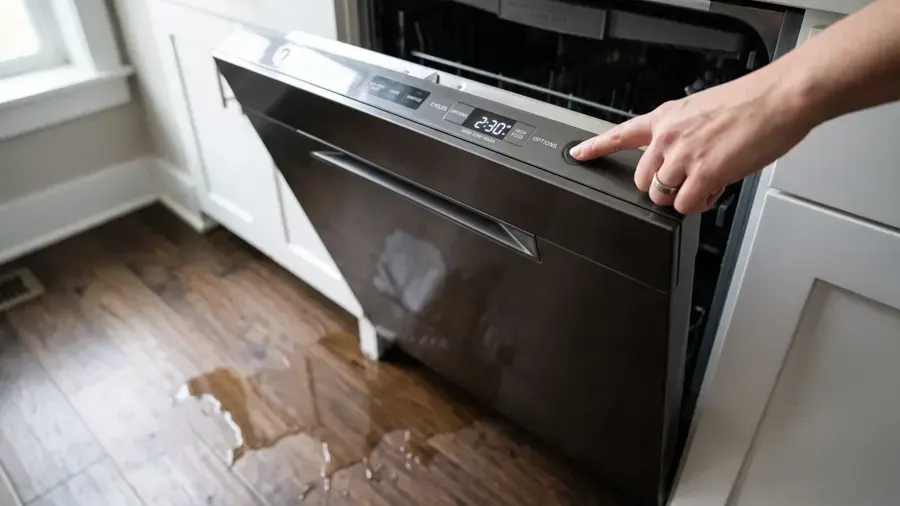
With 42.9 percent of occupied units rented, a neighbor's leaked washer or broken supply line can reach your unit through shared framing. The water runs along joists, soaks drywall and reaches the ceiling below or spreads through walls. Here is how to respond and who to call.
Key takeaways
- Water from a neighbor's appliance or supply line travels through shared joists and ceiling cavities to lower units.
- Document everything with photos before touching anything, then call the property manager first.
- Both units need extraction and drying; responsibility depends on the lease, insurance and who caused the leak.
- Dishwasher and washer leaks are typically Category 1, but drying teams must treat the water based on its source.
- Slow leaks left unaddressed can lead to costly damage in wall cavities and under flooring.
How water travels between units
With 42.9 percent of occupied units rented, a neighbor's leaked washer or broken supply line can reach your unit through shared framing. The water runs along joists, soaks drywall and reaches the ceiling below or spreads through walls.
In townhomes and stacked apartments, the floor joists of an upper unit and the ceiling cavity below are the same framing space. Water flowing along a joist drips steadily into the room underneath.
Dishwashers and washers have supply and drain lines running through the framing; a leak at the connection spreads water across multiple joists at once.
Supply line leaks are fast, and a burst hose can fill a space with water in minutes. Drain line leaks are slow and can go unnoticed for hours or days. Either way, water follows gravity through the framing, soaking insulation and drywall.
- A dishwasher or ice maker supply leak under kitchen cabinets runs down through the floor into the unit below.
- A washer drain line backup or slipped hose fills the wall cavity with water that drips into the ceiling below.
- A burst supply line in a wall cavity sends water in all directions, soaking insulation and drywall.
Document and notify immediately
When you find water in your ceiling or wall, document it before anything is moved. Photograph the stain, sagging drywall and wet flooring from multiple angles. If water is dripping, note the time. This record is essential for insurance claims.
Call your property manager or landlord immediately and email a summary of what you found, when, which unit it came from, and what you photographed.
- Do not open holes in the ceiling or drywall; the drying team will open it carefully in the right places.
- Leave the drying plan to the drying team rather than running fans on a wet wall.
- Do not discard affected items; the drying team will decide what needs extraction and cleaning.
Who calls the restoration team
In a rental with a property manager, the manager coordinates with the neighbor's insurance and the owner's policy. In a townhome, contact your homeowners insurance and your neighbor's insurance.
For newer buildings, ask the property manager whether any warranty applies to the plumbing.
Once responsibility is clear, the responsible party or their insurer arranges the restoration work. If there is a disagreement, the lease or condo documents usually set out the next step.
- Rental or condo: call the property manager first. They coordinate with the neighbor and insurance.
- Owner-occupied townhome: contact your homeowners insurance and your neighbor's insurance with photos and documentation.
- Ask whether the building has any warranty on its plumbing.
What the restoration team does
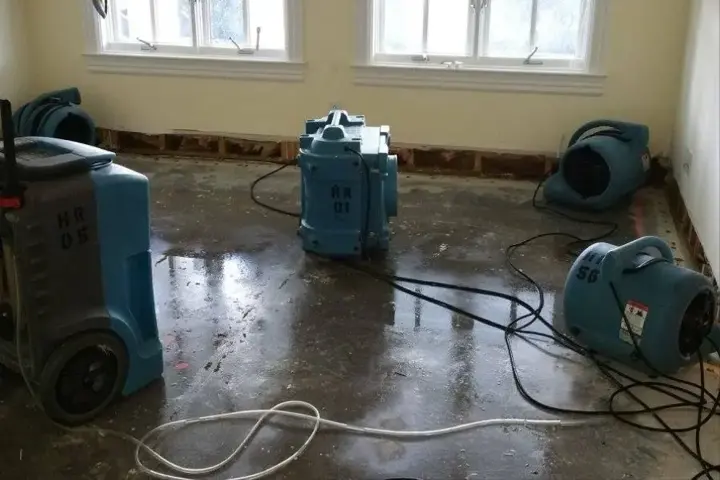
The leak source (the upper unit) and the damage (your unit) require separate work. An appliance-leak water damage cleanup crew stops the water at the source, extracts wet material, and runs dehumidifiers.
In your unit, the team opens the ceiling cavity, removes wet insulation and drywall, and dries the framing until the readings match dry reference material.
Drying time depends on how much water the materials absorbed, and daily readings decide when the equipment comes out.
- Source unit: shut off water, extract visible water, remove wet insulation, and dry the framing.
- Your unit: open ceiling cavity safely, remove wet materials, and dry the joists and subfloor.
- If water came from a drain line, the crew treats the affected surfaces before drying.
Sagging ceilings and water stains
A wet or sagging ceiling in your unit is the most visible sign of water damage from above. Drywall absorbs water quickly and gets heavier; soft, sagging drywall has soaked water from the floor above.
A brown stain with a darker halo shows where water has traveled.
A ceiling-leak water damage cleanup in a multi-unit building requires the drying team to open the ceiling and see how far water traveled through the joists.
If water still drips or sagging worsens, the upper unit leak has not been stopped; notify the property manager immediately.
- Sagging ceiling with visible drips needs opening.
- Worsening sagging means the upper unit leak is still active.
- Drying goal: joist readings that match dry reference material.
Insurance and liability
Homeowners and renters insurance typically cover sudden water damage, but details depend on the cause. A supply line burst is usually covered as accidental damage. If the neighbor's insurance denies the claim, you may file under your own policy and pursue recovery.
See the main city appliance leak page for more on water damage cleanup costs and what insurance typically covers.
In newer communities like Nexus, Oxford Station or The Towns at Red River, ask the property manager or builder whether any warranty applies to the plumbing.
- Keep insurance adjuster reports and your documentation together.
- Ask the property manager if the upper unit carried adequate liability insurance.
- Do not accept a settlement that skips drying the shared framing.
Prevention
In multi-unit buildings, appliance leaks happen regularly. Check supply line hoses on washers, dishwashers and ice makers at least once a year. Kinked, soft or cracked hoses should be replaced.
Washer hoses are a common leak source; failures inside the wall are invisible until water reaches the ceiling below. For more on these leaks and how to prevent them, see the Gallatin appliance leak page.
Know where your water shutoff is. In a stacked unit, also find the shutoff for the unit above; in an emergency, you may need to turn it off before the property manager arrives. Learn more on the Gallatin city hub.
- Replace old, stiff or cracked hoses as preventive maintenance.
- Ask the property manager to inspect supply lines during annual maintenance.
- Know where both your water shutoff and your neighbor's shutoff are located.