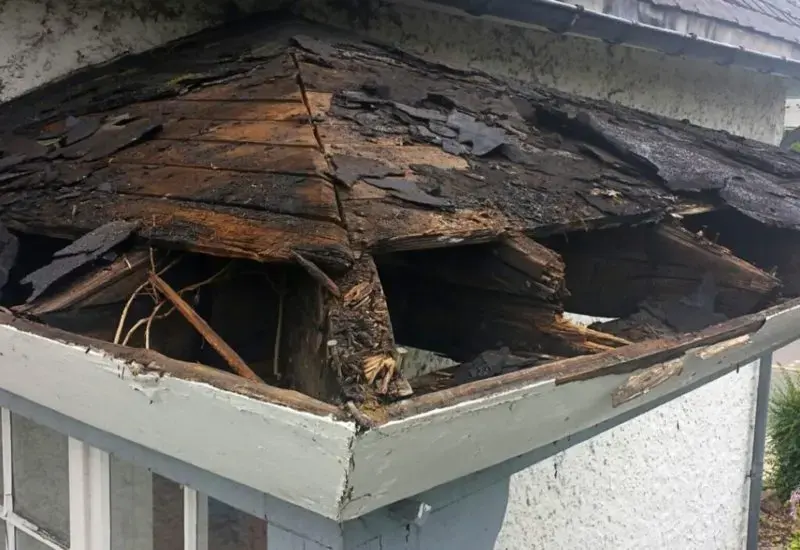
On December 9, 2023, an EF-2 tornado with peak winds near 125 mph crossed Gallatin, hitting Foxland Harbor, Fairvue Plantation, Woodvale and Patterson Farms and removing roofs from homes and apartment buildings.
Key takeaways
- Rain through an open roof soaks attic insulation, framing and the drywall ceiling below it.
- A tarp slows water entry, but it is a temporary cover and does not dry anything underneath it.
- A sagging, stained or soft ceiling means the cavity above it is saturated and needs to be opened carefully.
- Wet insulation is normally removed, while the framing is dried in place with dehumidifiers and air movers.
- Ceilings dry slowly after roof loss because several wet layers have no direct path for moisture to leave.
Tornado damage and the next rainstorm
A house that lost its roofing that day faces a second problem every time it rains: water goes straight into the attic, through the insulation and down into the ceiling below.
Unlike a small roof leak that an owner can spot and patch, a stripped roof leaves the framing and insulation open to the weather.
This post explains how rain moves through an open roof, what the first inspection looks for, and how ceilings and framing are dried.
When an EF-2 tornado tears away a roof, the damage to rafters and decking is obvious right away. The wind passes in seconds, but the water problem is only starting.
The first rain afterward falls on a house with nothing between the sky and the insulation, framing and drywall below.
Water moves quickly through an exposed attic. It soaks fiberglass insulation, adds weight that pulls the batts away from the framing, and drips onto drywall until it stains, softens and sags.
Wiring in a wet attic adds an electrical risk. Boxes of photos or holiday decorations stored up there absorb water and are often a loss.
- Attic access doors and pull-down stairs let water into the rooms below.
- Supply lines or HVAC condensate lines in the attic can carry water into walls and ceilings.
- Ductwork for an air handler can take on water and spread damp air through the house.
- Split or missing soffit and fascia boards let water run along the roof edge and down into wall cavities.
The tarp period: slowing water, not stopping moisture
Homes hit by a tornado are usually tarped while the permanent roof waits for repair. A tarp nailed over the opening stops the worst of the rain, but it does not stop water damage.
Water collects in pockets and at the edges, and the weight can sag or tear the cover. Under the plastic, damp air stays trapped against the framing, so the attic stays humid long after the rain ends.
- A tarp is a short-term cover, not a drying solution.
- Water that pools on a tarp or runs along its edge can soak framing or drip into the ceiling below.
- Humid, closed-in air under the cover can keep insulation and wood damp.
- Drying a tarped attic means moving damp air out and bringing dry air in, so the extraction crew opens vents and runs fans and dehumidifiers.
What the drying team finds in the attic and ceiling
The walkthrough after tornado damage is detailed and photo-documented. The extraction crew opens the attic hatch, looks at the framing and insulation, and takes moisture meter readings on the wood, the insulation and the drywall of the ceiling below.
In a Gallatin home with an exposed attic, the goal is a baseline that separates what is soaked from what is still dry.
Ceiling damage follows a pattern. Drywall directly under the leak path shows the first stains and soft spots, then the stain spreads as water travels along the framing.
A ceiling leak in Gallatin can look like one brown spot while the saturated area above is much larger, so the drying team often opens the ceiling wider than the visible damage suggests.
Pulling insulation and drying the framing
Wet fiberglass insulation is removed, not dried in place. It loses its insulating value once it absorbs water, and wet batts hold moisture against the wood in humid Tennessee air.
The insulation is cut out and bagged, which exposes the framing, wiring, ductwork and the top of the ceiling drywall.
With the insulation gone, the drying team sets up dehumidifiers and air movers and tracks progress with daily moisture readings. An antimicrobial may be applied to the wood where insulation sat wet against it.
- Drywall that is soft or spongy is often cut out and replaced rather than dried.
- Plumbing and wiring in the attic are checked after the area is opened.
- The area is left open to airflow so the attic can dry from several sides.
- New decking, underlayment and shingles go on only after the framing readings show the attic is dry.
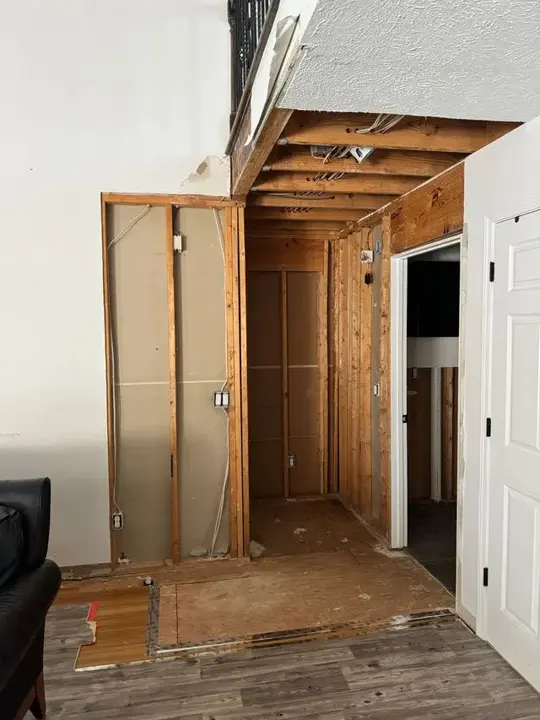
Drying a ceiling after roof loss
Once the insulation is out, the drying team plans the airflow. Soffit vents are opened, or extra vent openings are made, so humid air can leave.
Fans and dehumidifiers pull moisture out of the wood and off the ceiling below. A thermal camera can show wet spots as temperature differences and show where the air needs to go.
An attic and ceiling take longer to dry than a single wet room because several layers are wet and moisture has to travel through insulation, framing and drywall before it escapes.
Daily readings with a pin meter decide when equipment can come out.
- A ceiling left in place can hold moisture longer, while a removed ceiling dries faster but costs more to replace.
- Thermal imaging helps the crew find wet pockets that a visual check would miss.
- The permanent roof waits until the attic readings confirm the space is dry.
Working with insurance after tornado damage
Storm damage to a roof and the water that follows it are usually claimed under a homeowners policy, though terms differ by policy. Photograph the roof loss from the ground, note the date and record which areas are missing roofing.
When water damage from a stripped roof is reported, the insurer sends an adjuster to look at the roof loss, the attic water entry and the ceiling damage.
The restoration crew shares its readings and photos so the scope of drying and replacement is clear.
If a roof leak comes from a later storm while repairs are pending, it is worth reporting that separately.
Tornado history and ice storm limbs in Gallatin
The December 2023 tornado was not the first to open roofs in Gallatin.
On April 7, 2006, an F3 tornado crossed from Hendersonville into southern Gallatin, killing 7 people in the Gallatin area, injuring about 121 and damaging or destroying about 700 homes and businesses in Sumner County.
Wind is not the only roof threat: limbs that fall during ice storms, such as the one in January 2026, can open roofs as well.
Homeowners with a tarped roof are wise to look in the attic after every storm.
A small stain on a ceiling is often the first sign that water is getting past the tarp, and catching it early limits how much framing and insulation gets wet.