Structural Drying in Gallatin, TN
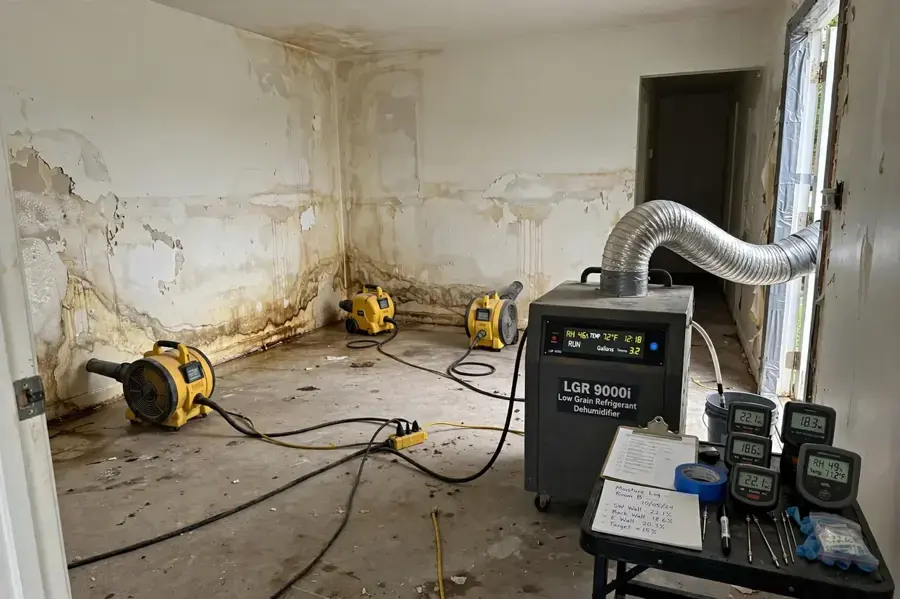
After a creek flood, a roof opening or a split pipe, water hides in subfloors, wall cavities and ductwork that look dry. The drying team sizes air movers and LGR dehumidifiers to the structure and logs readings until the framing matches a dry reference.
(888) 849-5796Wet structure? Call about drying- 24/7 dispatch
- Class-based equipment
- LGR dehumidifiers
- Daily logs
Before drying equipment goes down
- 1
Fix the source
The leak, roof opening or creek water entry has to be stopped before any machine is switched on.
- 2
Extract the liquid
Standing water comes out first so the machines can work on moisture that has soaked into materials.
- 3
Map the moisture
Thermal imaging and meters mark wet walls, floors, ceilings and ductwork.
- 4
Choose a dry reference
Readings from an unaffected area of the same house set the target for the rest.
Drying the structure, not the surface
Surfaces dry first and hide wet framing, subfloor and cavities, so equipment is sized to the volume of wet material and checked until it all matches dry.
- Water category
- Category 1 to 3, set before the equipment is chosen
- Typical class
- Class 1 to 4, from small wet areas to dense materials
- Equipment
- LGR and desiccant dehumidifiers, air movers, thermo-hygrometers, meters
- Drying goal
- Wet materials near the readings of unaffected ones
Most Gallatin homes are late 1990s through 2020s frame houses with brick or brick-and-siding exteriors, and the exterior can look fine while the framing behind it holds water. Structural drying is the stage after extraction and removal where equipment pulls the rest out and readings prove it, which matters because wet framing left behind brick can stay hidden for weeks.
How the equipment is sized
The class of loss sets the count. A small, early Class 1 or 2 loss needs a few air movers and a dehumidifier, while a Class 3 or 4 loss through walls and subfloor needs far more, with desiccant units for dense materials. Gallatin's humid subtropical climate adds load in summer, so windows stay closed and the dehumidifiers work harder, and in winter the same equipment keeps the heated air from carrying moisture into walls.
Walls or floors still damp?
(888) 849-5796Call about structural dryingAfter creek or roof water
After a creek flood, subfloors, wall cavities and ductwork need drying, and in May 2024 water on Barton Drive reached floors and ductwork. After a roof loss, attic insulation and ceilings are the wet layers. Either way, the drying plan covers every layer, not just the visible ones. Ductwork that took on water can keep circulating humidity through the house, so it is inspected and dried or replaced.
- Creek water: removal comes first, per storm and flood cleanup in Gallatin.
- Wet crawl space: joists are dried as in crawl space water damage in Gallatin.
- Roof openings: see roof leak water damage in Gallatin.
Daily readings and the drying goal
Each day the team records temperature, humidity and moisture readings at the same marked points. When wet materials read within 2 to 4 points of an unaffected spot, equipment comes out. The dry reference comes from an unaffected wall in the same building rather than a generic number, and the logs go to the adjuster. See the Gallatin water damage page for every service.
What does structural drying cost in Gallatin, TN?
Expect structural drying in Gallatin, TN to run about $1,000 to $8,000. Most of the figure comes from how many days equipment runs, how much equipment the class of loss needs, how much area is wet and whether dense materials need desiccant units.
Class 1 to 2
$1,000 to $2,500
- Small wet area
- A few machines
- Short equipment run
Class 3
$2,500 to $5,000
- Walls and subfloor
- More dehumidifiers
- Several days
Class 4
$5,000 to $8,000+
- Dense materials
- Desiccant units
- Extended drying
Equipment days, the number of machines, the size of the wet area and the density of the materials involved shape the final price. Run the numbers in the water damage cost calculator.
How structural drying is handled in Gallatin
- 1
Map
Meters and thermal imaging show the full wet area before machines are set.
- 2
Size the equipment
Air movers and dehumidifiers are chosen by class and by the volume of wet material, with extra units for dense materials.
- 3
Monitor daily
Temperature, humidity and moisture readings are logged at marked points every day.
- 4
Verify dry
Equipment comes out when wet materials match the dry reference.
Coverage across Gallatin, TN
The Gallatin water damage pros cover ZIP code 37066, from the historic downtown and the Hillcrest Drive area to Foxland Harbor, Fairvue Plantation, Kennesaw Farms and the Station Camp area.
See every area servedStructural drying questions in Gallatin
How is structural drying different from surface drying?
Surface drying dries what you can see. Structural drying removes moisture from subfloor, framing and wall cavities, which is where lasting damage starts.
What does IICRC S500 mean?
It is the industry standard for water damage restoration, covering how water is sorted by category, how equipment is chosen and how drying is confirmed.
How long does structural drying take?
Three to five days is common for a contained, early loss. Dense materials, deep water or humid weather can add days, and readings decide when it ends.
Why should windows stay closed?
Open windows let humid outside air in, and Gallatin summers are humid, so the dehumidifiers would be working against the weather. Closed windows keep the drying room controlled.
Is the noise and power use normal?
Yes. Air movers and dehumidifiers run around the clock. The equipment adds to the power bill, and that cost can be documented for the claim.
Will insurance pay for equipment days?
Equipment days are usually part of a covered water loss. Daily logs show why each machine stayed, so the adjuster can see the need.
Wet framing in your Gallatin home?
Machines are matched to the wet volume, readings are logged every day and equipment stays until the structure matches a dry reference.