Crawl Space Water Damage in La Vergne, TN
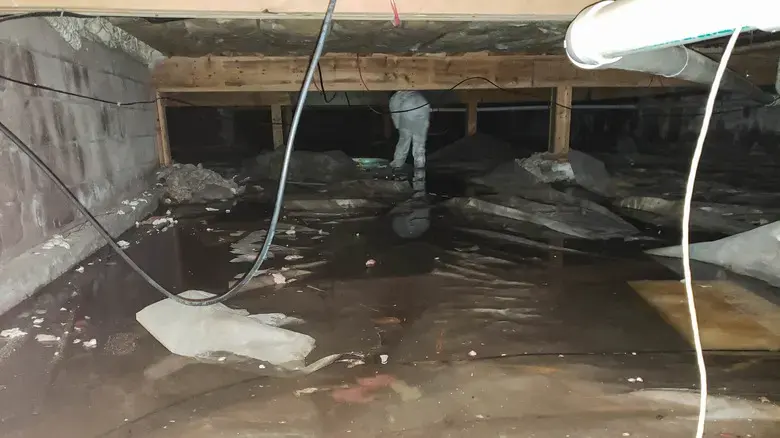
For La Vergne houses with a crawl space, winter downpours, creek rises and a leaking pipe can all leave water under the floor. Limestone-based karst ground and humid air keep that space damp for a long time, so the crew pumps it out and dries the joists.
(888) 849-5796Water under the floor? Call now- 24/7 dispatch
- Submersible pump-outs
- Barrier and insulation removal
- Joist moisture readings
First moves when water sits under a La Vergne house
- 1
Look from the hatch
Open the access and note standing water, a sagging barrier or a dripping pipe, without stepping into the water.
- 2
Cut power to the space
Switch off the circuits that feed lights and outlets under the house, since wiring often runs close to the water.
- 3
Stop any pipe source
If a pipe is leaking, close the main valve. If the water came from outside, treat it as contaminated.
- 4
Photograph and wait
Capture the water level and the walls, then leave the barrier and insulation for the crew.
Dampness below rises into the living space
A wet crawl space pushes moisture up through the subfloor into the rooms above. With limestone ground and humid summers, that dampness lingers long after the water is pumped.
- Water category
- Category 1 from a leaking pipe, Category 3 from creek runoff or sewage
- Typical class
- Class 2 to 4, spanning soil, joists, insulation and subfloor
- Equipment
- Submersible pumps, dehumidifiers, air movers, pin meters for joists
- Drying goal
- Joists and subfloor within 2 to 4 points of dry framing elsewhere in the house
Whether a given La Vergne house has a crawl space depends on the house, but where one exists it is the lowest spot on the lot and the first to collect water. Hurricane Creek, Finch Branch and heavy December to March rain all send water toward low ground.
Why water lingers under a house here
Rutherford County sits on karst terrain with limestone bedrock, and FEMA's study of the creeks describes small drainage areas and steep slopes, so rain moves fast and then soaks in. Once water is under a floor, it has no quick way out. Humid summer air keeps the space damp even after the standing water is gone, and thunderstorms can add more water at any time of year.
Dry the framing before it warps
(888) 849-5796Call about the crawl spaceWhat happens during the pump-out
- Submersible pumps clear the standing water, starting at the lowest point.
- The soaked vapor barrier is pulled, and wet insulation is removed.
- Creek or sewage water is Category 3, so surfaces that remain get antimicrobial treatment.
A pipe leak is far cleaner than runoff, which is why the source decides the plan. For storm water, see storm and flood cleanup in La Vergne.
Drying joists and subfloor
Dehumidifiers and air movers are placed to push air along the joists, and pin meters on the framing show progress every day. Wood that stays wet can grow mold within 24 to 48 hours, so the first days matter. A new barrier goes down only after the framing reads dry. Floors above are checked too, as described in hardwood floor water damage in La Vergne.
What stays on the record
Photos of the water depth and the daily readings go into the claim file. Because water under a house is out of sight, the photos matter: the depth, the condition of the barrier and the state of the insulation all show what the loss looked like before pumping. The overall process appears on the La Vergne water damage restoration page.
What does crawl space water damage cost in La Vergne, TN?
Crawl space water damage in La Vergne, TN usually runs $1,500 to $7,000. A damp space with no standing water is the low end, while contaminated water, wet insulation and a new barrier push toward the high end.
Damp but no pool
$1,500 to $2,500
- Moisture check under the floor
- Barrier lifted
- Dehumidification
Standing water
$2,500 to $4,500
- Pumps run first
- Wet insulation removed
- Several drying days
Contaminated water
$4,500 to $7,000+
- Category 3 steps
- Antimicrobial treatment
- Fresh barrier after drying
Cost depends on the water category, the size of the space, how much insulation is soaked and how soon pumping began. Run the numbers in the water damage cost calculator.
How crawl space water damage is handled in La Vergne
- 1
Check and sort
The crew inspects from the hatch, finds the source and sets the water category.
- 2
Pump out
Pumps clear the water, and the wet barrier and insulation come out.
- 3
Dry the framing
Dehumidifiers and air movers run beneath the floor with outside vents closed.
- 4
Verify
Joist and subfloor readings are compared with dry framing elsewhere before a barrier is relaid.
Coverage across La Vergne, TN
Crews work throughout ZIP code 37086, from the large Lake Forest Estates subdivision and Cedar Lake to Lake Woods, Akin Heights and the city's apartment complexes and condos.
See every area servedCrawl space questions from La Vergne homeowners
Does every La Vergne house have a crawl space?
Foundation types differ from house to house, so check yours. Where a crawl space exists, it deserves a look after every heavy rain.
Why does it stay damp after the rain stops?
Limestone ground and humid air hold moisture, and a vapor barrier traps water on top of it. Pumping and dehumidifying are both needed.
Does the vapor barrier have to be removed?
A barrier soaked with creek or sewage water is removed, since it cannot be cleaned. A clean barrier from a minor leak may be lifted, dried and relaid.
Will the floors above be affected?
Yes. Moisture rises into the subfloor and any wood flooring, so those are read too, and hardwood may need drying mats.
Can mold grow under the house after a leak?
Wet wood and insulation can support mold, which is why soaked materials are removed and the framing is dried quickly instead of left to air out.
Is creek water under the house covered by insurance?
Water that rises from a creek is flood, which a standard homeowners policy often excludes, while a leaking pipe is treated differently. Coverage depends on the policy, so ask your insurer.
Water under your La Vergne house?
The restoration team pumps out the crawl space, removes what is soaked and dries the framing until readings fall to a dry level.