
A sewage backup in Goodlettsville does not follow the same path for every homeowner. The city splits across Davidson and Sumner county lines, and water and sewer service depends on which side of that invisible boundary the house sits.
Key takeaways
- Goodlettsville's sewer department runs the sanitary lines, but water service routes through three different utilities depending on location.
- Davidson County homes are served by Madison Suburban Utility District or Metro Water Services; Sumner County homes by White House Utility District.
- Heavy rain can overload sewer lines, and the city system runs its own pipe network with five pumping stations.
- The city lists a sewer billing adjustment that can be requested within 90 days when no water entered the sewer.
- The water damage from a sewage backup is Category 3 contamination and requires protective gear and professional cleanup.
Why Goodlettsville homes have different water and sewer providers
Some homes reach the City of Goodlettsville Sewer Department, while neighbors across the street call White House Utility District, Madison Suburban Utility District, or Metro Water Services.
During heavy rain, when the city's sewer lines take in more than they can handle, the distinction matters.
This is how to figure out which utility covers a property, and what to do in the first hours after water backs up into the house.
Goodlettsville is one city, but it straddles the Davidson and Sumner county line. Davidson County covers the southern half of the city and Sumner County the northern half, and the line separates school districts, property taxes and utility providers.
The City of Goodlettsville Sewer Department runs the sanitary sewer system: a city-owned pipe network and five pumping stations. That part is the same for every home in town.
Water service, however, depends on which side of the county line the home sits. Davidson County residents in Goodlettsville are served by Madison Suburban Utility District (MSUD) or Metro Water Services. Sumner County residents are served by White House Utility District (WHUD).
Some properties may be in transition zones or served by more than one provider, but the county boundary is the main divider. That means two neighbors with sewage backups can end up calling different utility companies.
Windsor Green, for example, is on the Davidson side, while Copper Creek is on the Sumner side.
How to find out which utility runs water service to a house
The easiest check is the water bill. The utility name appears on the billing statement, and in some cases the account website lists the service area.
If a bill is not at hand, check the property address against the service maps or call the three utilities that cover Goodlettsville.
Madison Suburban Utility District serves parts of the Davidson County side.
Metro Water Services (part of the Metropolitan Government of Nashville and Davidson) also serves parts of the Davidson County side.
White House Utility District serves the Sumner County side of Goodlettsville. Sewer service is paired with the water provider, so the water bill also points to who to call.
Why sewage backups happen in Goodlettsville during heavy rain
A sewage backup occurs when the sewer line that drains a house becomes blocked or when the main line that receives it is too full to accept more water. Heavy rain is the usual trigger.
During the March 14 to 15, 2025 flash flooding, the National Weather Service reported two northbound lanes of I-65 underwater just south of exit 95 at Goodlettsville.
When that much water falls, stormwater can find its way into sewer lines through cracks or connections, and if the inflow exceeds what the system's five pumping stations can move, water can back up into low-lying homes, especially in creek-bottom areas near Mansker Creek and Dry Fork Creek.
Low ground raises the stakes. Homes on the south side of Janette Avenue sit in the 100-year floodplain, and low subdivisions near Long Hollow Pike see fast water rise in heavy rain.
A backup in those areas can happen even when no pipe has broken under the house.
What to do the first few hours after sewage backs up
When sewage water appears in a basement or main floor bathroom, shut off the main water supply if possible and contact the city sewer department. Describe the backup clearly: is it just the one fixture, or has it spread to multiple drains?
Did it coincide with heavy rain, or did it happen on a dry day? That detail helps the city determine whether the backup is from the home's own line, a local blockage, or an overloaded system.
Do not drain the backed-up water yourself by opening drains or flushing toilets further. Do not enter the flooded area without boots, gloves and eye protection.
Sewage water is Category 3 contamination and carries bacteria, viruses and other pathogens. Keep children and pets away from the affected rooms.
Getting the sewer department to respond and when to call a restoration team
The city sewer department will send a crew to check the main line. If the problem is in the city main, the department handles it.
A blockage in the lateral, the pipe that runs from the house to the main, is less clear, because the city pages do not say who owns the lateral.
Ask about it during the call or with a plumber who works in Goodlettsville.
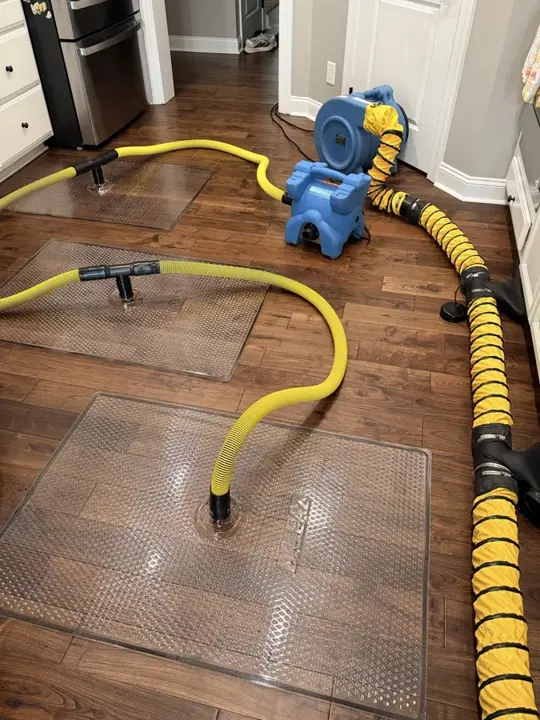
While the city works on the main, the homeowner should contact a water damage restoration team. The water that has backed up needs to be extracted, and any materials it has touched need to be assessed for removal or cleaning.
Drywall, insulation, flooring and baseboards soaked in sewage water are usually removed and replaced. The extraction crew pumps out the standing water and applies antimicrobial treatment to framing and affected surfaces.
Sewer billing adjustments and insurance for category 3 backups
After the emergency is over, ask the sewer department about the billing adjustment.
The city says customers may request one within 90 days if no water entered the sewer, so a homeowner who thinks a charge is wrong should raise it quickly and ask whether a backup qualifies.
Homeowners insurance may cover some sewage backup cleanup, depending on the policy and the cause of the backup. If the backup is from a city main or the lateral, and the homeowner has backup coverage, the insurer may cover the cleanup cost.
Contact the insurer immediately after the backup to start a claim.
After the cleanup: inspection and prevention
Once the water is extracted and the drying team has verified that wood moisture is back to safe levels, a plumber can inspect the home's sewer lateral and, if needed, the connection to the city main.
Cracks or roots in the lateral can be sealed or the pipe replaced. For homes near the Mansker Creek bottoms, a backup valve may help prevent the next sewage backup from causing as much damage.
The extraction crew can recommend these during the drying work.