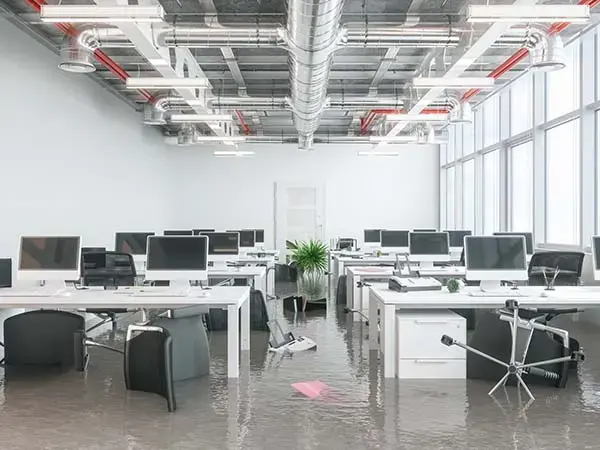
The Lebanon Square has flooded before, and it will flood again. Sinking Creek, called a very flashy stream by the Wilson Post, rises fast when a downpour hits Wilson County. In February 1989, Sinking Creek flooded most of downtown.
Key takeaways
- Move high-value inventory, cash registers and equipment to upper shelves or upstairs before water enters, and photograph the water level on walls as it rises.
- Close doors to contain the water to one area if possible, and turn off electrical power to flooded spaces at the breaker panel and any gas service.
- Drain standing water from the storefront and back rooms as soon as it is safe to do so, then begin removing soaked flooring, baseboards and lower drywall.
- Document every item removed with photos and video, noting the depth of water and any damage, and keep a detailed inventory for your insurance claim.
- Brick storefronts and masonry walls hold moisture for weeks after the water recedes, so the drying crew will pump out standing water in the walls and monitor wood framing and floors until readings reach dry.
Why Sinking Creek and Town Creek leave the Square
On May 2, 2010, sandbags went up around Lebanon and floodwater on the Square reached almost three feet.
Then on March 27 and 28, 2021, about seven inches of rain fell in roughly 24 hours, Town Creek overflowed on the Square, and the Tennessee Emergency Management Agency reported 50 downtown businesses with water damage.
Here is what a shop or restaurant owner should do from the moment water arrives until the drying crew leaves.
Two creeks run beneath and around downtown Lebanon: Sinking Creek and Town Creek. When Wilson County takes several inches of rain in a day, they can overflow onto the Square and into ground-level storefronts.
Storm flood cleanup starts once the water begins to recede.
The Square Historic Preservation District, designated in 2019, covers about 15 acres of older commercial buildings, and masonry walls that stand in floodwater tend to hold that moisture long after the street is dry.
South Cumberland Street near the Square has chronic flooding. Lebanon averages about 54 inches of rain a year, and heavy storms are part of the pattern, so creek floods are a real risk for any ground-level merchant downtown.
The first hours: save what you can
When the forecast calls for heavy rain or when water starts to rise outside, a business owner has a window to move things.
Cash registers, point-of-sale terminals, high-value inventory and small equipment should move to the second floor or to upper shelves well above the expected water line.
The 2021 flood put about 2 feet of water in places downtown and 32 inches at Edwards Feed, so plan for water to climb well up interior walls.
Once water arrives, electrical safety comes first. Shut off power to the flooded spaces at the breaker panel to avoid shock risk while moving through the water.
If the building has a gas line to a water heater or kitchen range, close the main shutoff. Do not turn electrical equipment back on until an electrician inspects it for water damage.
- Photograph and record video of the water rising and the water level on walls and fixtures. Include the time and date in your documentation.
- Move merchandise and equipment to higher ground before water reaches it, or place it on tables and shelving if moving it out is not possible.
- Sandbag doorways if time allows, but never block a fire exit.
- Turn off the HVAC system and leave it off until a technician checks it.
Water classification: creek or supply leak
The water in the Lebanon Square during a flood is not clean. Sinking Creek and Town Creek water mixed with storm runoff, street debris and anything that washed into the creek counts as Category 3 contaminated water.
It carries soil, silt and microorganisms, and contact requires protective gear. The restoration team treats this water the same way it handles sewage backup cleanup or raw sewage emergencies.
- Category 3 water: creek overflow, storm runoff, anything that crossed the outdoor ground. Requires boots, gloves, respiratory protection for crew, and removal of any porous materials that touched it.
- Do not let employees or customers touch the water without protective equipment, and keep children and pets away from it.
- Any material that soaked up the water and cannot be thoroughly cleaned, such as paper products, cardboard boxes, or low wall sections, will be removed.
First jobs: extraction and tear-out
The mitigation team's first move is to pump out the standing water. For a storefront with several feet of water, that means placing submersible pumps at the low point inside and pumping to the street.
As the water level drops, the crew begins removing damaged materials. Any flooring that has soaked in contaminated water comes up.
If the storefront has vinyl, tile or wood flooring over a slab or subfloor, the crew often removes it so the layers underneath can dry.
Vinyl baseboards, the lower sections of drywall, and any cabinetry or built-ins that touched the water also come out and are bagged for disposal.
For restaurants and food service businesses, all food and preparation surfaces that touched floodwater must be disposed of per health code. This includes stored ingredients, commercial refrigeration units, and preparation tables. Walk-in coolers and freezers are similarly affected if water entered them.
The commercial water damage cleanup follows strict health and safety protocols. The drying team documents all removed items with photos before bagging them.
- Flooring removal exposes the slab or the subfloor and joists underneath, so air movers and dehumidifiers can reach all wet surfaces.
- Baseboards and lower wall sections come out so the cavity behind them can dry.
- For brick storefronts, the interior face of the wall is checked with pin meters to measure moisture deep in the masonry, because water wicks through brick and holds moisture for weeks.
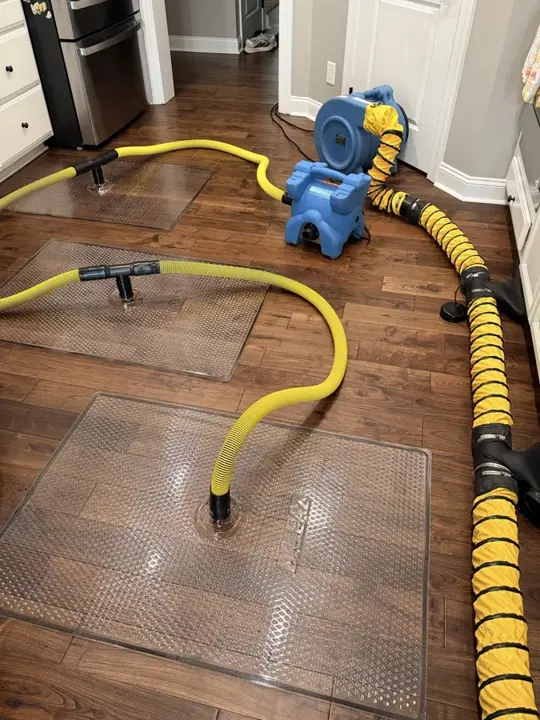
Brick storefronts: the slow dry
Older masonry buildings present a special challenge during drying. Brick and mortar wick water upward and outward, and that moisture can stay inside the wall for a long time.
The drying team takes meter readings in the brick to measure how wet it is, and those readings set the drying plan.
For a brick storefront on the Lebanon Square, the closure length depends on the wall depth and how high the water rose, and the wait is usually longer than for a wood-framed room.
- Pin meter readings on the brick interior tell the drying team how much moisture is still in the wall.
- Dehumidifiers run continuously, and air movers circulate air across all surfaces.
Documentation for the insurance claim
Every item removed should be photographed and listed. Water depth on walls and fixtures, the date and time the water arrived, and damage to equipment and inventory all become part of the claim.
The restoration crew photographs the scene, but a business owner should also take their own photos and video, recording the water level on storefronts and in the interior, and walking through to show what was damaged.
This record, combined with the crew's documented tear-out, forms the basis for the insurance adjuster's assessment.
For commercial water damage, lost business income during closure and the cost of replacing inventory and equipment are typically covered separately from the building loss. The more detailed the documentation, the better the claim can be supported.
- Record video walking through the storefront and back rooms, narrating the water level and damaged items as you go.
- Take still photos of items being removed, showing the water line on walls, and the condition of equipment and inventory.
- Note the date and time the water arrived and the date the drying crew begins work.
- Ask the restoration team for a copy of their final report, which documents what was removed and the post-extraction condition of the space.
After drying: reopening and repairs
Once the drying team confirms the space is dry, reconstruction can begin. For a flooded storefront, that means new flooring, baseboards, lower wall finish and paint. Food-service businesses must ensure that all work meets health department standards before reopening.
- Walk-in coolers and food prep equipment must pass health inspection before food service resumes.
- Electrical systems should be inspected by an electrician before any equipment or lights are turned on.