Structural Drying in Lebanon, TN
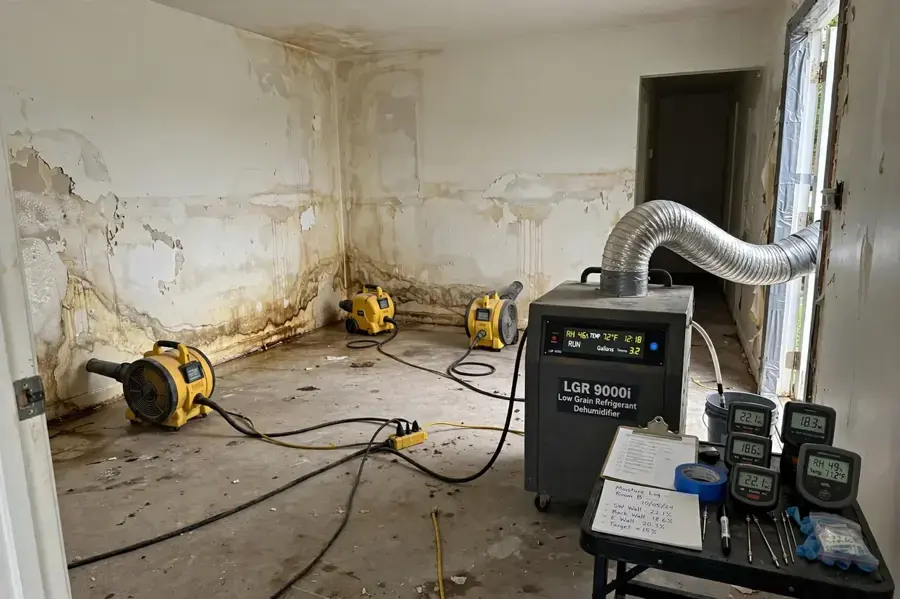
Humid subtropical summers slow evaporation, and older masonry buildings on the Lebanon Square can hold moisture long after creek flooding. The drying team sizes equipment to the class of loss, reads framing, subfloor and wall cavities every day and stops only when they match a dry reference.
(888) 849-5796Structure still wet? Call for drying- 24/7 dispatch
- IICRC S500 standard
- LGR dehumidification
- Psychrometric logs
What to do while a structure is still wet
- 1
Stop adding moisture
Confirm the source is shut off or repaired before drying begins, or the work starts over.
- 2
Keep the building closed
Close exterior doors and windows so humid outside air stays out of the wet rooms.
- 3
Do not rely on fans alone
Household fans and heaters can push moisture into other rooms without removing it.
- 4
Keep notes and photos
Record dates and conditions so the claim file shows what was wet and when.
Drying is measured, never guessed
Materials can feel dry and still hold water. Moisture meters and air readings show what the eye cannot, and they set when equipment is allowed to leave.
- Standard
- IICRC S500, the industry drying standard
- Class
- Class 1 to 4, from slow absorbers to dense materials
- Equipment
- LGR dehumidifiers, desiccants, air movers, thermo-hygrometers and moisture meters
- Drying goal
- Wet materials within 2 to 4 points of a dry reference
Lebanon's housing is mostly wood frame with brick or siding, and its older masonry sits around the Square. Humid subtropical air and about 54 inches of rain a year mean wet structures dry slowly unless the equipment is sized and tracked.
How the equipment is sized
The IICRC S500 standard sorts losses into classes. Class 1 involves little absorbent material, Class 2 a large wet area with carpet and framing, Class 3 water from above, and Class 4 dense materials such as concrete and hardwood. Class and room volume set how many air movers and dehumidifiers go in, and which type.
Get the structure dried to a reading
(888) 849-5796Call about structural dryingDaily readings and the drying goal
Every day, the drying team records temperature, humidity and moisture readings at marked points and adjusts the equipment. Machines are moved, added or removed based on those numbers. Drying ends when wet materials read within 2 to 4 points of a dry reference taken from the same building, not when they feel dry.
- Meters check wood, drywall and concrete.
- Thermo-hygrometers log the air.
- Daily notes go into the claim file.
Lebanon conditions that change the plan
Summer highs in the low 90s F load the air with moisture, so dehumidifier capacity is raised and doors stay closed. Older masonry on the Square holds water after creek flooding and dries slowly. After pumping, see water extraction; flooded foundations follow crawl space water damage, and business buildings use commercial water damage.
Proof for the adjuster
The readings, photos and equipment logs give the adjuster a record of how the structure was dried and when it reached the goal. The Lebanon water damage page lays out the whole process.
Why not just open the windows
Opening windows brings humid outside air into a wet building and slows the dry-out. A closed building with dehumidifiers controls the air, so evaporation keeps going. The crew sets the doors and equipment so the air stays dry and the drying keeps moving.
What does structural drying cost in Lebanon, TN?
In Lebanon, TN, structural drying typically runs $1,000 to $8,000, mostly driven by how many days equipment runs and how many machines the class of loss needs. A small, lightly wet area sits low; dense materials or a large wet footprint sit high.
Class 1 to 2
$1,000 to $2,500
- Light absorbent loss
- A few rooms
- Short equipment run
Class 3
$2,500 to $5,000
- Water from above
- Ceilings and walls wet
- More dehumidifiers
Class 4
$5,000 to $8,000+
- Concrete or hardwood
- Slow-releasing materials
- Desiccant units
Cost follows the class of loss, the volume of the space and how many days the equipment has to run. Run the numbers in the water damage cost calculator.
How structural drying is handled in Lebanon
- 1
Measure the start
Meters and thermo-hygrometers record the wet materials and the air conditions.
- 2
Place the equipment
Air movers and dehumidifiers are sized and positioned by class of loss.
- 3
Track each day
Readings are logged at marked points and equipment is adjusted to match.
- 4
Prove it dry
Equipment is removed only once every wet material matches a dry reference taken in the same building.
Coverage across Lebanon, TN
The Lebanon water damage pros cover ZIP codes 37087 and 37090, from the Lebanon Square and the historic districts to Villages of Hunters Point, Coles Ferry Village and the townhomes off Castle Heights Avenue.
See every area servedStructural drying questions in Lebanon
What is IICRC S500?
It is the industry standard for water damage restoration. It defines water categories and classes, how equipment is sized and the drying goal for wet materials.
How do I know when drying is done?
Meters show it. Wet materials must read within 2 to 4 points of a dry reference from the same building, which is different from feeling dry.
Why do dehumidifiers matter more than fans?
Fans move air across wet surfaces, but dehumidifiers pull moisture out of the air so it can keep evaporating. Without them, humid Lebanon air slows the whole job.
How long does a dry-out take?
Often three to five days for a contained loss. Dense materials and humid summers take longer, and the daily readings decide when equipment leaves.
Why are the machines so loud?
Large dehumidifiers and air movers move a lot of air. They are placed to cover the wet area and are removed as soon as the readings are met.
Is structural drying covered by insurance?
Drying a covered loss is generally part of the claim, though coverage depends on the policy and the cause. Check with your insurer.
Wet structure in your Lebanon property?
The drying team sizes the equipment, tracks the readings every day and keeps it running until the structure matches a dry reference.