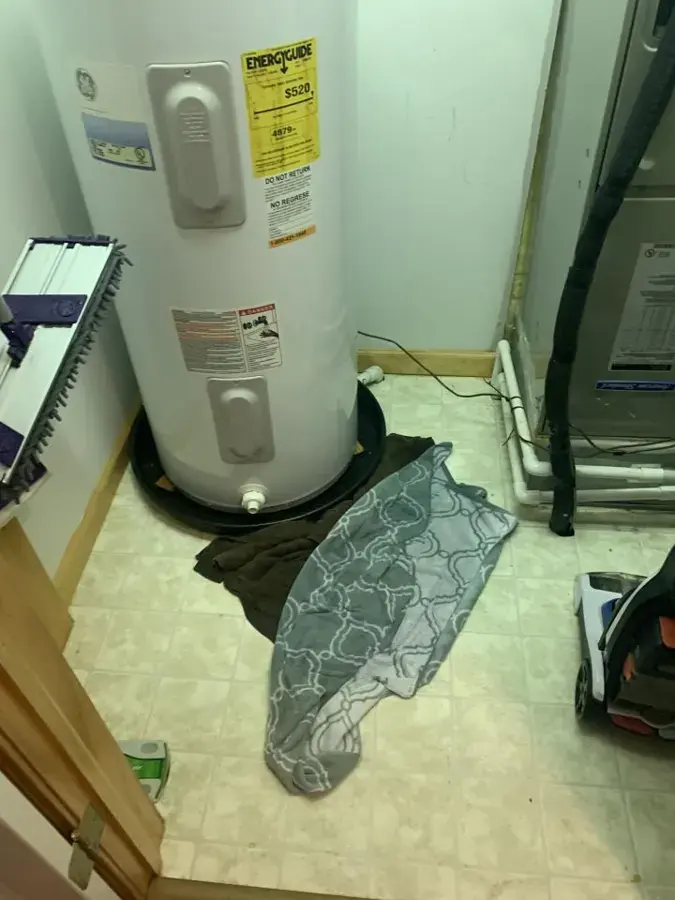
A 40 or 50 gallon water heater tank holds enough water to soak a closet, garage or utility room floor in minutes.
Key takeaways
- A drain pan under a water heater catches minor leaks and drips but cannot hold a full tank failure.
- State plumbing code calls for a pan at least 1.5 inches deep with a drain of at least 3/4 inch for tank water heaters where a leak would cause damage.
- A leaking tank is replaced, not repaired, and Lebanon requires a permit to install a water heater.
- Lebanon inspection requests go by email to [email protected].
- Where the tank sits matters: a closet tank sends water into wall framing, while a garage tank spreads across the slab.
What a drain pan is for, and its limits
Unlike a supply line leak that shows up at a shutoff or a faucet drip that announces itself slowly, a leaking tank often fails suddenly.
A seam cracks or a corroded fitting opens, and the water follows the easiest path: down the walls, under drywall and cabinets, and across the floor.
Lebanon is home to the water heater maker Lochinvar, and the city requires a permit to install a water heater, so a leak means more than a water heater leak cleanup. The replacement tank also has to be permitted.
This post covers what a drain pan is meant to do, why it sometimes fails, and what the restoration crew finds when a tank lets go.
A drain pan is a shallow tray under a water heater. Its job is to catch the small leaks that build up over time: a drip from a relief valve, a weeping connection or a pinhole near the bottom.
When a pan works as designed, that drip runs through a drain line to a safe spot, so the water does not pool and damage the floor.
A pan is not a dam. When a tank develops a large seam crack or a burst weld, the pan fills in seconds and overflows, and the water spreads faster than the drain can carry it away.
In a closet, it runs under the drywall.
In a garage, it spreads across the slab. A full tank failure can overwhelm even a well installed pan.
- State code asks for a drain of at least 3/4 inch, with the pan sloped so water leaves by gravity.
- A clogged, undersized or poorly sloped drain line cannot move water fast enough to stop an overflow.
- Older metal pans can rust through and quit catching water even during a minor drip.
- Some older homes have no pan at all, especially in closets, where a failed tank can soak wall framing before anyone notices.
How a water heater tank fails
Tanks are lined to protect the steel from rust. Over time the lining can break down, especially if the tank is not maintained, and small cracks let water seep through.
As those cracks grow, or a weld at a seam or the bottom turns porous, the leak speeds up. A tank that was weeping can start streaming, and soon the whole space around it is wet.
Age matters. An older tank is more likely to fail from internal corrosion than a newer one, and the failure often arrives with little warning.
- A relief valve that weeps or drips is often an early sign of an aging tank.
- Rust stains at the base or sides of the tank point to water seeping through the lining.
- A tank that rumbles or pops while heating may have sediment buildup.
- Once a tank leaks, replacement is the fix. Patching or sealing a leaking tank does not hold.
Lebanon's water heater permit and inspection rules
Lebanon requires a permit to install a water heater. The city uses the 2021 International Plumbing Code, and inspection requests are sent by email to [email protected].
Because the permit is tied to the new tank going in, the cleanup and the replacement need to be planned together.
The inspector looks at the installation itself: the drain pan, the drain line, the relief valve and the supply and discharge connections.
Under the state-adopted plumbing code, a tank in a place where a leak would cause damage needs a pan at least 1.5 inches deep with a drain of at least 3/4 inch.
- Inspections are requested by email, so build that step into the repair schedule.
- Ask the installer whether the permit has been pulled before the old tank comes out.
- A tank installed without a permit can raise questions during a later home sale or renovation.
The first hours after a tank lets go
A homeowner who finds a flooded closet or garage faces a choice: stop the leak first or call for help with the water.
Closing the water supply to the tank stops new water coming in, but it does nothing about what is already on the floor. Water extraction and appliance leak cleanup do not need to wait for the plumber.
The tank location changes the plan. A tank in a closet off a hallway or bedroom sends water into wall framing and, in a two-story house, toward the room below.
A tank in a garage spreads across the slab without entering the structure as deeply.
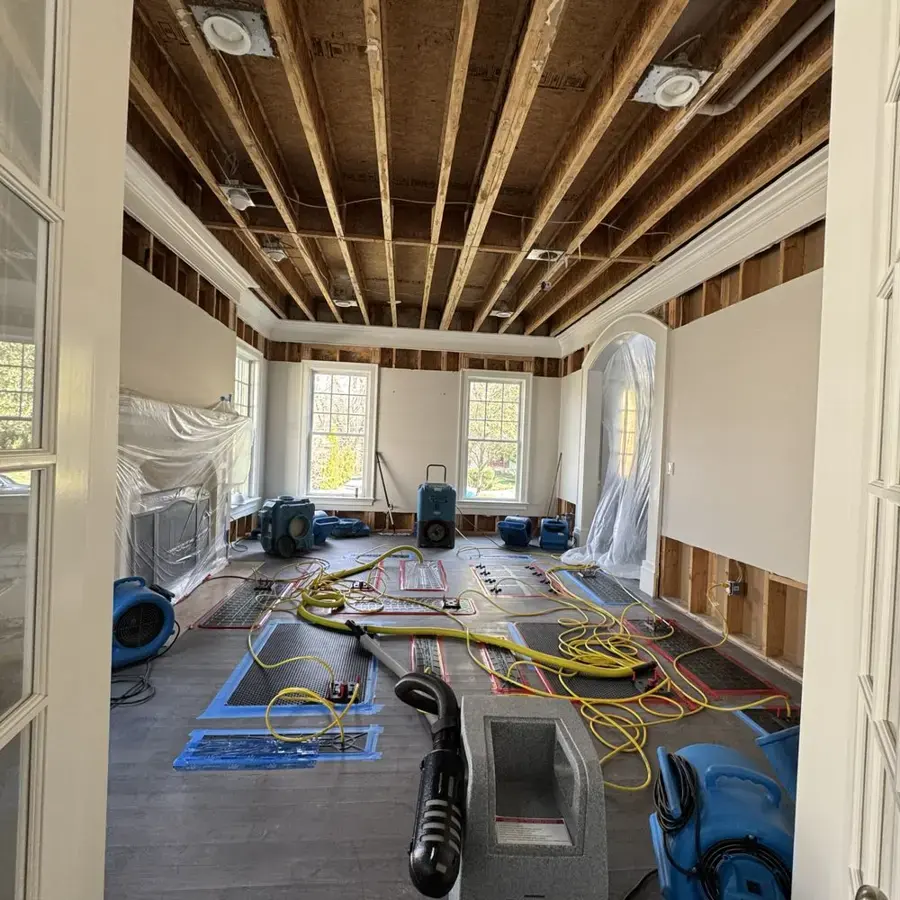
A tank in a crawl space can soak joists and insulation. The restoration crew checks the location, takes moisture readings on framing and subfloor, and plans extraction and drying around what the readings show.
What the extraction and drying team removes and dries
The first job is to pump or mop up the standing water. If the pan had a drain line, a clogged or broken line is the first thing to check, since it is why the pan failed to do its job.
Then the crew evaluates walls and floor. If water soaked into wall framing behind the tank, the drywall is opened.
If the floor is concrete, readings show how far the water traveled. If it is a wood subfloor over a crawl space or joist cavity, the cavity and joists are dried with dehumidifiers and air movers.
- Drywall that stays wet for a long time is usually removed and replaced rather than dried.
- Soaked insulation behind or under a water heater is removed, not dried in place.
- Vinyl, tile or laminate flooring is often lifted so the subfloor can dry, then replaced once readings are dry.
- A drain line that failed to carry water away is replaced or reworked as part of the repair.
Lochinvar, local tanks and the replacement
Lebanon is home to Lochinvar, a maker of water heaters, boilers and pool heaters with a workforce of about 425.
A homeowner whose tank fails can replace it with any brand that meets the local requirements, which center on the permit, the drain pan and drain, the relief valve and the connections.
After a leak is cleaned up, the tank is replaced and the permit and inspection are completed.
Coverage for a tank leak depends on the policy, and some policies treat the water damage and the replacement tank differently, so it helps to read the policy language before filing. For help with the cleanup side, see the Lebanon water damage pages.
Prevention and maintenance
A maintained tank tends to last longer and fail less abruptly. Flushing sediment out is a common maintenance step, and Lebanon homeowners can check for rust at the base, rumbling during heating and any weeping at the relief valve.
Planning a replacement as a tank ages is easier than an emergency extraction after a failure.