Crawl Space Water Damage in Lebanon, TN
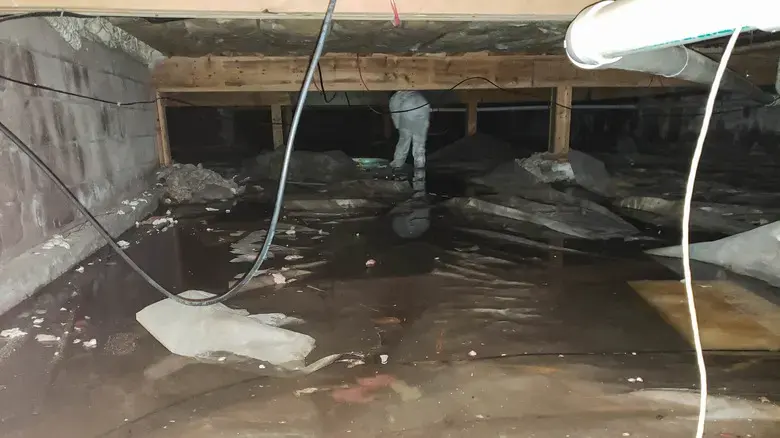
Lebanon sits on shallow limestone in the Central Basin, and about 54 inches of rain a year push water toward low foundation spaces. Older historic district houses are the most likely to have crawl spaces. The mitigation team pumps out the water, pulls the vapor barrier and dries the joists.
(888) 849-5796Water under the house? Call now- 24/7 dispatch
- Submersible pump-outs
- Torn barrier removal
- Joist readings
What to do when the crawl space floods
- 1
Look from the hatch
Open the crawl space hatch carefully with a flashlight and check for standing water or a soaked vapor barrier.
- 2
Do not crawl in
Stay out of standing water near wiring, ducts and the HVAC unit.
- 3
Name the source
Note whether a pipe split, rain ran in or sewage backed up, because the source sets the water category.
- 4
Photograph the view
Record the depth and everything visible from the opening.
Why joists and subfloor hold on to water
Wood framing absorbs moisture from standing water and humid air, and the space has little airflow. A pump alone is not enough, so joists are read until they match a dry sample.
- Water category
- Category 1 from a pipe, Category 3 from runoff or sewage
- Typical class
- Class 2 to 3, with wet framing and subfloor
- Equipment
- Submersible pump, LGR dehumidifiers, air movers, moisture meters
- Drying goal
- Joists and subfloor within 2 to 4 points of a dry reference
A crawl space is out of sight, so water can sit there for days. Lebanon gets about 54 inches of rain a year, its limestone is shallow, and Wilson County flood materials say sinkhole systems can flood in large rain events, all of which push water toward low foundation spaces.
How water gets under a Lebanon house
Runoff that crosses the yard can flow in through vents and low openings. A split pipe or a failed water heater can fill the space from above, and a heavy storm can raise water around the foundation. Older homes in the Cumberland University, East Spring Street and Castle Heights historic areas are the likeliest to have crawl spaces.
Get the crawl space pumped and drying
(888) 849-5796Call about the crawl spaceHow the mitigation team dries a wet crawl space
A submersible pump clears standing water, and a torn or soaked vapor barrier is pulled out so it stops trapping moisture against the soil. The crew photographs the space, reads the joists and subfloor with a meter and sets air movers and LGR dehumidifiers, with vents closed so humid summer air stays out. Equipment stays until the framing matches a dry reference.
- Standing water pumped to the outside.
- Soaked barrier and insulation removed.
- Joists and subfloor read with a meter.
- Vents closed while dehumidifiers run.
When the water is contaminated
Runoff that crossed the yard, or a sewage backup, is Category 3. Insulation and barrier come out and the framing is cleaned with antimicrobial; see sewage backup cleanup in Lebanon and storm and flood cleanup. Wet floors above follow the hardwood floor drying process.
Humid summers make it harder
Humid subtropical summers in Lebanon, with highs in the low 90s F, push warm moist air into a cool crawl space, where it condenses on wood and the barrier. That is why vents are closed and dehumidifiers run during a dry-out, and why a space that was only damp is worth checking before the next wet season.
What does crawl space water damage cost in Lebanon, TN?
In Lebanon, TN, crawl space water damage restoration typically runs $1,500 to $7,000, depending on how much water stood there and whether it was clean. A damp space sits low; contaminated water that reached the framing sits high.
Damp, no standing water
$1,500 to $2,500
- Moisture mapped first
- Dehumidifiers set up
- Barrier checked
Standing water
$2,500 to $4,500
- Pump-out of the space
- Barrier pulled
- Joists dried
Contaminated water
$4,500 to $7,000+
- Insulation removed
- Antimicrobial treatment
- Longer drying time
Cost follows how deep the water was, whether it was clean or contaminated, the size of the space and how many days of drying the joists needed. Run the numbers in the water damage cost calculator.
How crawl space water damage is handled in Lebanon
- 1
Pump out the water
A submersible pump clears the space and the water source is noted.
- 2
Remove the wet layer
The vapor barrier and soaked insulation are pulled out of the space.
- 3
Read the framing
Meters check joists and subfloor, and the readings set the equipment.
- 4
Dry and verify
Dehumidifiers run with the vents closed until the wood matches a dry reference.
Coverage across Lebanon, TN
The Lebanon water damage pros cover ZIP codes 37087 and 37090, from the Lebanon Square and the historic districts to Villages of Hunters Point, Coles Ferry Village and the townhomes off Castle Heights Avenue.
See every area servedCrawl space questions from Lebanon homeowners
Why does a crawl space stay wet after rain stops?
Shallow limestone and heavy rain push water toward low spots, and a vapor barrier traps what gets under it. Without a pump and dehumidifiers the space dries slowly.
Is it safe to go in and look?
From the hatch, yes. Stay out of standing water near wiring, ducts and the HVAC unit, and let the crew enter with the right equipment.
Does the vapor barrier have to come out?
If it is torn or holding water, yes. A soaked barrier keeps moisture against the soil and the joists, so it is removed and replaced after drying.
How long does a crawl space take to dry?
Often several days of dehumidification after the pump-out. Humid subtropical summers slow it, so readings decide when equipment leaves.
Can wet joists cause problems upstairs?
Yes. Moisture can wick into the subfloor and wood flooring above, which is why the floors above are read and sometimes dried with mats.
Will insurance cover a wet crawl space?
It depends on the source. A burst pipe is often treated differently from rising water or runoff, so read your policy and ask your insurer before work begins.
Water under your Lebanon home?
The mitigation team pumps the crawl space out, removes the wet barrier and dries the framing until the readings match a dry reference.