Lake Forest Estates has more than 3,100 single-family homes, and La Vergne as a whole is mostly newer housing, with a median build year near 2002.
Key takeaways
- A warm spot on the floor, especially over a supply line run, is the earliest sign of a hot water line leak under a slab.
- A water meter that runs constantly or a meter reading that climbs when no fixtures are on points to an active leak in the line.
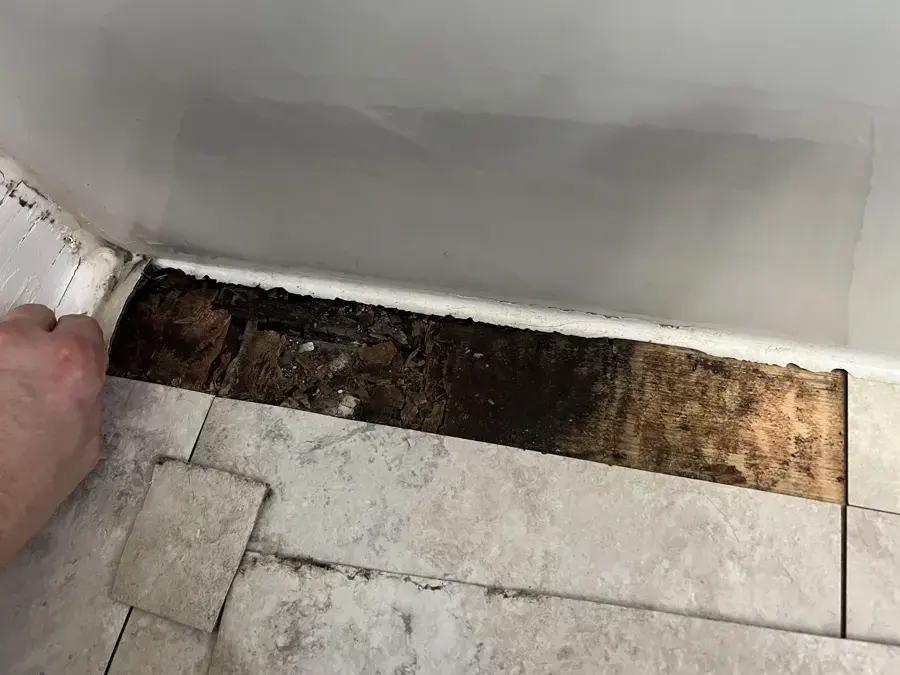
- Wet baseboards or a musty smell on the first floor can mean the subfloor and flooring have been absorbing moisture from a slab leak.
- Rutherford County sits on limestone bedrock, so water that escapes under a slab does not always have a quick way to drain away.
- Slab leaks are found by pressure testing the line or using thermal imaging, and the cure is line replacement or repair, followed by subfloor and flooring drying.
The warm floor spot: the most common early sign
In a home built on a concrete slab, supply lines can run through or under the foundation that supports the house.
When one of those lines springs a leak, the signs are subtle at first: a spot on the floor that feels warmer than the rest of the room, a water meter that spins even when no one is running water, or a baseboard that suddenly felt damp this morning.
A small leak under a slab can go unnoticed for weeks, quietly saturating the soil below the concrete and soaking the subfloor above it.
This is what to watch for, why it matters, and what the drying process looks like once the leak is found.
The first person to notice a slab leak is often the one who walks barefoot across the floor.
A patch of concrete that is noticeably warmer than the surrounding floor, especially in a hallway or near a wall, is usually a hot water supply line running directly under that spot.
Cold water lines are less likely to show a temperature difference because the water inside them is the same temperature as the surrounding soil.
The warm spot may be small at first, the size of a dinner plate or a floor tile, and it may come and go depending on whether hot water is running elsewhere in the house.
If the leak is slow, the subfloor above the slab is already absorbing water and the framing is beginning to swell slightly.
A quick test is to place a thermometer on the warm spot and on an adjacent piece of floor; a difference of more than a few degrees points to an active leak.
The water meter that runs when everything is off
The second sign is often discovered by a homeowner checking the water bill. The meter sits outside the house or in a meter box by the street, and the dial spins to record flow.
On a dry day when no water is running inside, the meter should not move. If it does, water is leaving the system somewhere: either a leak is active in the house or a line under the slab is dripping.
La Vergne bills sewer charges based on the water meter reading, not a separate sewer meter. This means every drop that passes the meter is charged twice: once for water and once for sewer.
A slab leak that runs around the clock can quietly add to both charges. An unexplained jump in the bill is a good reason to check the meter and then call the City of La Vergne Water System.
Wet baseboards and musty smells from below
As a slab leak persists, the subfloor above it absorbs the water. Baseboards and the bottom inches of drywall on the first floor begin to wick moisture from the damp wood and concrete around them.
The visible sign is a water stain on the baseboard, darkening from the bottom up. The smell is a musty, earthy odor, the signature of mold beginning to grow in wet materials.
At this stage, the subfloor and the framing members above the slab have been wet for days or weeks.
The moisture may not have penetrated deep enough to stain flooring yet, but if the leak continues and the water spreads, flooring will begin to cup (wood flooring buckles and rises at the seams) or buckle outward.
Laminate or vinyl plank flooring may swell and gap. The drying team will need access to the subfloor to evaluate how far the moisture has traveled and whether the flooring itself can be saved.
Why limestone ground matters under a slab
Lake Forest Estates sits in Rutherford County, which lies on karst terrain with limestone bedrock. After a slab leak, the water that escapes from the supply line collects in the ground immediately under the slab.
Instead of draining away, it can stay in contact with the concrete and the subfloor, and keep drawing moisture into the materials above.
Humid subtropical air also slows structural drying, and damp ground under the slab can keep sending moisture upward while equipment runs. A leak found early and fixed quickly usually means a shorter drying job.
A leak that has run for weeks takes longer to pull back out of the materials.
Finding the leak: pressure test and thermal imaging
Once a slab leak is suspected, a plumber can run a pressure test on the water supply line to confirm the leak and roughly locate it.
The line is pressurized with nitrogen gas or air, and the pressure drop over time tells the plumber whether the leak is real and how fast it is running.
A slow leak shows up as a gradual drop, while a fast leak is obvious in minutes.
For pinpointing the exact location under the slab, a thermal imaging camera or ground-penetrating radar can find the leak. A thermal image shows temperature differences in the floor, revealing where warm water is escaping.
Once the leak is found, the plumber can cut an access hole, repair the line (by patching or replacing the affected section), and test the repair to ensure the leak is gone.
What happens to flooring and subfloor after a slab leak is fixed
The repair itself is only the first step. Once the leak is stopped, the question is whether the moisture that has accumulated under the house is gone.
The drying team uses moisture meters on the concrete, the framing above it, and the subfloor to get readings. The goal is to bring wood moisture back to match a dry reference section elsewhere in the house.
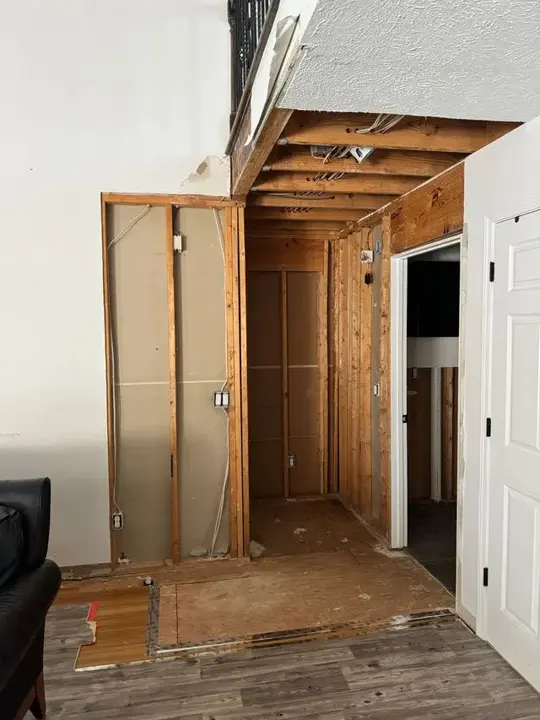
Flooring that has buckled or cupped is usually removed and replaced once the subfloor has dried. Laminate and vinyl plank flooring that swelled during the wet period is nearly always pulled up because it will not flatten again.
Hardwood flooring may be salvageable if it was not heavily saturated, but the drying timeline is slower. The subfloor itself may need replacement if it has softened or warped beyond recovery.
A slab leak found and repaired early usually means less material to replace than one that saturates the framing.
After drying: preventing the next leak
Once the supply line is repaired and the flooring is replaced, the immediate crisis is over. But slab leaks recur in some homes, either from the same line or from another section that was not yet leaking.
Homeowners in Lake Forest Estates can reduce the risk by paying attention to meter readings every month. A sudden jump, even a small one, is a sign that something is off.
Some homes install water leak detection systems that monitor for unusual flow and sound an alarm if a leak is detected, catching the next one before it saturates materials. The main-city slab leak information has more on prevention and long-term management.