Structural Drying in La Vergne, TN
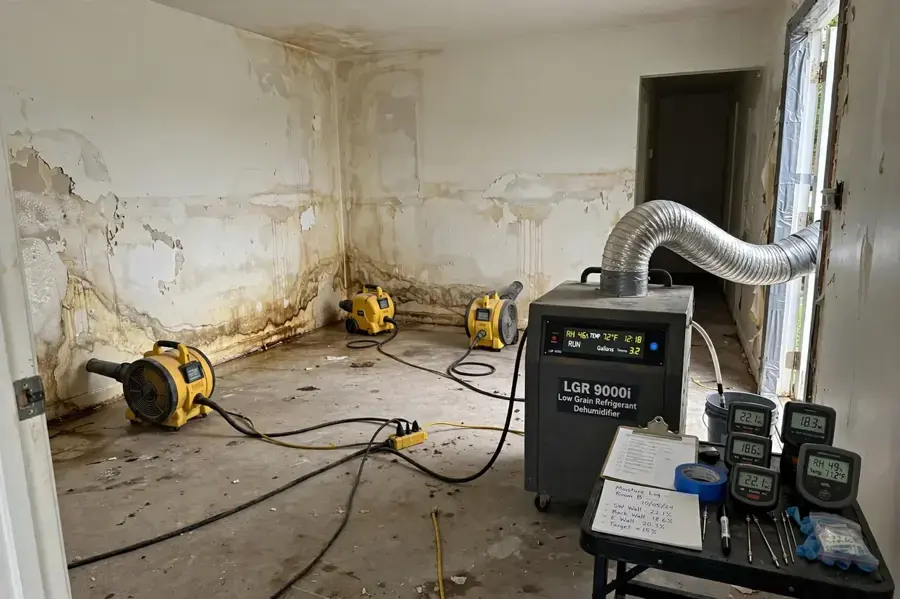
La Vergne's humid subtropical air slows evaporation, and its limestone-based karst ground holds water, so a wet house here often needs more dehumidifier time than the carpet suggests. The drying crew sizes equipment to the class of loss and logs readings until the structure is dry.
(888) 849-5796Walls still damp? Call now- 24/7 dispatch
- IICRC S500 goal
- Dehumidifier sizing
- Daily humidity logs
First moves when a La Vergne house stays damp
- 1
Stop the source
Make sure the leak, the drip or the incoming water has stopped before any drying equipment goes in.
- 2
Close windows and doors
Keep humid outside air from entering while dehumidifiers work, which matters in La Vergne's muggy summers.
- 3
Leave wet materials in place
Do not rip out drywall or carpet before the moisture map shows what can be dried.
- 4
Note what feels damp
Record musty smells, soft baseboards and cool, clammy walls to point the meters.
Dry on the surface is not dry inside
Paint and carpet look dry in a day, while studs, subfloor and joists keep water for much longer. That hidden moisture causes swelling and odors if it is left behind.
- Water category
- Any category, though Category 3 materials are removed before drying
- Typical class
- Class 1 through 4, which decides how many machines a room gets
- Equipment
- Fans, LGR and desiccant dehumidifiers, cavity drying kits, thermo-hygrometers
- Drying goal
- Wet materials landing within 2 to 4 points of an unaffected spot
Structural drying is the long part of a water loss. Extraction takes minutes, but the wood, drywall and subfloor that soaked up water take days to give it back, and La Vergne's hot, humid weather makes that job harder than it looks from the doorway.
How humid air and limestone ground change the job
Rutherford County sits on karst terrain with limestone bedrock, which can keep low rooms and spaces under the house damp. The humid subtropical climate adds water to the air itself. Both slow drying, so dehumidifiers run longer and the crew keeps doors and windows shut, letting daily readings decide when the machines leave.
Dry what the fans cannot see
(888) 849-5796Call about drying equipmentWhat the equipment does
- Air movers push dry air across wet surfaces and into cavities.
- LGR dehumidifiers pull moisture out of the air and carry it away as liquid.
- Desiccant units handle dense materials such as hardwood or concrete that refrigerant machines cannot finish.
Where concrete is involved, slab leak water damage in La Vergne shows how the work is planned.
Why partial drying fails
Stopping early is the most common mistake. A wall can feel dry to the hand while the bottom plate and the insulation inside still hold water. When the machines leave too soon, the moisture creeps back, paint blisters, trim swells and the smell returns. Daily readings are what prevent that.
Classes, readings and the finish line
Class 1 through 4 describes how much water a loss involves and how slowly the materials release it. A thermo-hygrometer tracks air temperature and humidity, while pin and pinless meters read the framing. The structure counts as dry when wet materials reach within 2 to 4 points of an unaffected reference in the same house. Large pools of water follow water extraction in La Vergne before any drying begins, and the overall approach is on the La Vergne water damage restoration page.
What does structural drying cost in La Vergne, TN?
Structural drying in La Vergne, TN usually runs $1,000 to $8,000, driven mostly by how many days the equipment runs, how many machines the class of loss needs and how much floor area is wet. Dense materials like hardwood and concrete cost more.
Class 1 to 2
$1,000 to $2,500
- A room or two
- Fans and LGR units
- Short equipment run
Class 3
$2,500 to $5,000
- Wet walls and ceilings
- More machines
- Cavity work
Class 4
$5,000 to $8,000+
- Wood, concrete or plaster
- Desiccant units
- Long drying run
Cost depends on the class of loss, how much floor is wet, the number of equipment days and how quickly drying started. Run the numbers in the water damage cost calculator.
How structural drying is handled in La Vergne
- 1
Measure the starting point
Meters, a thermal camera and a thermo-hygrometer record how wet the materials and the air are.
- 2
Place the equipment
Air movers and dehumidifiers are set to the class of loss and the room volume.
- 3
Adjust daily
Readings are taken each day, and machines move or change as the wet edge shrinks.
- 4
Prove it dry
Equipment leaves only when wet materials match an unaffected reference.
Coverage across La Vergne, TN
Crews work throughout ZIP code 37086, from the large Lake Forest Estates subdivision and Cedar Lake to Lake Woods, Akin Heights and the city's apartment complexes and condos.
See every area servedStructural drying questions from La Vergne residents
Why does drying take longer in humid weather?
Wet materials release water into the air, and humid air has little room for more. Dehumidifiers create that room, which is why drying runs longer in summer.
What is the difference between Class 1 and Class 4?
Class 1 involves little water in low-absorbing materials, while Class 4 involves deeply held water in dense materials such as hardwood, plaster or concrete.
How do I know the building is actually dry?
Meters compare the wet materials with an unaffected spot in the same house. Equipment leaves only when the numbers match, not when surfaces feel dry.
Can I run my own fans and a store dehumidifier?
They help a little, but they rarely match the capacity needed for framing and subfloor. Professional drying also records the readings that an insurer expects.
Will drying stop odors and swelling?
Removing hidden moisture is the point. Water left in framing or subfloor causes swelling, staining and odor, and wet wood can support mold after about a day or two.
Does limestone ground really affect drying?
Rutherford County sits on karst terrain with limestone bedrock. Low rooms and spaces under the house can stay damp longer, so the crew plans extra dehumidifier time and checks the readings.
Walls still wet in your La Vergne home?
The drying crew measures the wet materials, sizes the equipment to the class of loss and logs readings until the structure is dry.