Crawl Space Water Damage in Hendersonville, TN
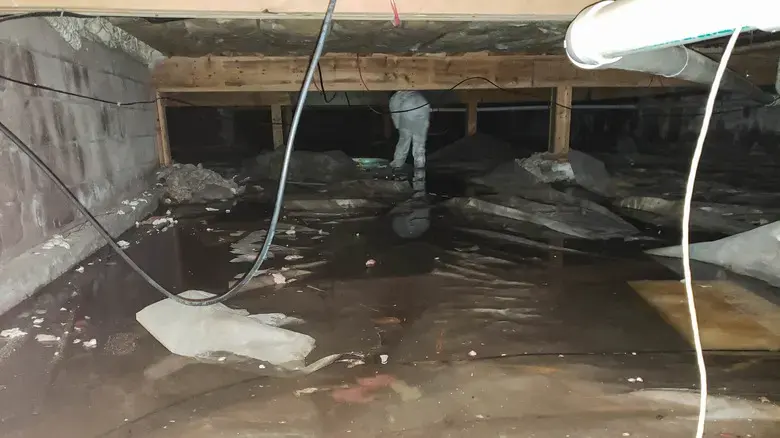
Clay holds rain against footings and crawl space walls long after a storm ends, and many houses built from 1970 to 1999 sit over exactly that kind of space. The drying crew pumps out standing water, removes the soaked vapor barrier and dries joists and subfloor until they read dry.
(888) 849-5796Water under the house? Call now- 24/7 dispatch
- Crawl space pump-out
- Vapor barrier removal
- Joist readings
First moves when you find water under the house
- 1
Look before entering
Shine a flashlight through the hatch first. Do not climb in over standing water, wiring or hanging insulation.
- 2
Shut the water off
Close the main valve to rule out a pipe under the floor feeding the pool.
- 3
Check the downspouts
Note whether gutters drain near the foundation, since where rain goes decides whether water returns.
- 4
Photograph the barrier
Record water depth, the vapor barrier and any wet insulation before pumps start.
Clay, rain and a floor that stays damp
Rain that clay will not absorb works against footings and into the space under the house. Wet joists keep feeding humidity upward after the standing water is gone.
- Water category
- Category 1 from a pipe, Category 3 from runoff or a drain
- Typical class
- Class 2 to 4 across soil, insulation, joists and subfloor
- Equipment
- Submersible pumps, LGR dehumidifiers, air movers, pin meters on joists
- Drying goal
- Joists and subfloor match dry framing elsewhere in the house
The median Hendersonville home dates from about 1989, and a large share were built between 1970 and 1999. Houses of that era in Middle Tennessee commonly sit over crawl spaces, and the clay around them drains slowly. Close to Drakes Creek, Station Camp Creek and the Old Hickory Lake shore, rising water adds to the problem.
What water under a Hendersonville house does
A wet crawl space does not stay down there. Moisture climbs into the subfloor, the joists and the insulation, and it cups wood flooring in the rooms above. Humid lake summers keep the air under the house heavy, so a barrier that looks dry can hide framing that is not.
- Standing water: pumped out first with submersible units.
- Vapor barrier: torn or soaked sheeting is pulled so the soil can release its moisture.
- Insulation: batts that took on water come out, since they hold it against the subfloor.
Water pooled under your house?
(888) 849-5796Call about the crawl spaceDrying with the vents shut
Dehumidifiers and air movers go in once the water is out, and the vents on the foundation stay shut so outdoor humidity does not undo the work. Pin meters on the joists, not a glance at the barrier, say when the space is dry. If the water came from a creek or from runoff, soaked materials are removed and surfaces treated first, as described under storm and flood cleanup in Hendersonville.
Grading, gutters and the next storm
Because clay holds rain against footings, grading and gutter discharge matter. A downspout that empties beside the foundation sends water straight back toward the crawl space. One account of creek flooding is in Drakes Creek flooding and Hendersonville homes. Floors above often need the hardwood floor drying process afterward, and the Mount Juliet version of this work is under crawl space water damage.
What does crawl space water damage cost in Hendersonville, TN?
In Hendersonville, TN, crawl space water damage restoration commonly runs $1,500 to $7,000. A damp space with no standing water sits at the low end; contaminated creek or runoff water that needs removal and a new barrier sits near the top.
Damp only
$1,500 to $2,500
- Barrier pulled
- Dehumidifiers running
- Joists read daily
Standing water
$2,500 to $4,500
- Pump-out first
- Wet insulation removed
- LGR drying
Contaminated water
$4,500 to $7,000+
- Category 3 protocol
- Antimicrobial treatment
- New barrier after drying
The depth of the water, whether insulation and barrier come out and the water category decide most of the cost. Run the numbers in the water damage cost calculator.
How crawl space water damage is handled in Hendersonville
- 1
Check the space
A flashlight and moisture meters show water depth, wet joists and damaged insulation.
- 2
Pump out
Submersible pumps clear the pooled water and the soaked barrier is pulled up.
- 3
Dry with vents shut
Dehumidifiers and air movers pull moisture from the joists and subfloor.
- 4
Verify the readings
Pin meters on the joists confirm dry numbers before equipment leaves.
Coverage across Hendersonville, TN
The Hendersonville water damage pros cover ZIP codes 37075 and 37077, from the lakefront streets of Indian Lake Peninsula and Sterling Cove to Cherokee Woods, Walton Ferry and the newer Station Camp area.
See every area servedCrawl space questions from Hendersonville homeowners
Why does my crawl space stay wet after rain?
Clay soil holds rain against footings and crawl space walls, and gutters that discharge near the foundation add to it. Water that gets in has little room to drain away.
Can wet framing under the house affect the rooms above?
Yes. Moisture rises into the subfloor and joists, can cup wood flooring and keeps indoor humidity high. Mold becomes a risk when wet materials stay damp for a day or two.
Does the vapor barrier have to be removed?
A barrier that sat in water or tore is usually pulled so the soil and joists can dry. A new one goes down after the readings are done, not before.
Is creek water under the house different?
Yes. Water from Drakes Creek or Station Camp Creek is Category 3, so soaked insulation is removed and surfaces are treated before drying begins.
Who fixes the grading and the gutters?
A landscaper or contractor handles grading and downspout discharge. The drying crew can show where water entered, which helps the fix target the right spot.
Will insurance cover crawl space water?
It depends on the source. A burst supply pipe is often covered as sudden damage, while groundwater or rising creek water usually is not under a standard policy. Ask the insurer first.
Water under your Hendersonville home?
The drying crew pumps out the space, pulls the soaked barrier and dries joists and subfloor until the readings match dry framing elsewhere in the house.