Water Heater Leak Cleanup in Hendersonville, TN
Hendersonville water is reported as hard, and mineral scale wears on tanks and fittings over the years. When one lets go in a garage, closet or attic, the restoration team extracts the water and dries the walls, the floor and any ceiling below.
(888) 849-5796Water heater leaking? Call now- 24/7 dispatch
- Tank water extraction
- Wall bottom drying
- Moisture logs
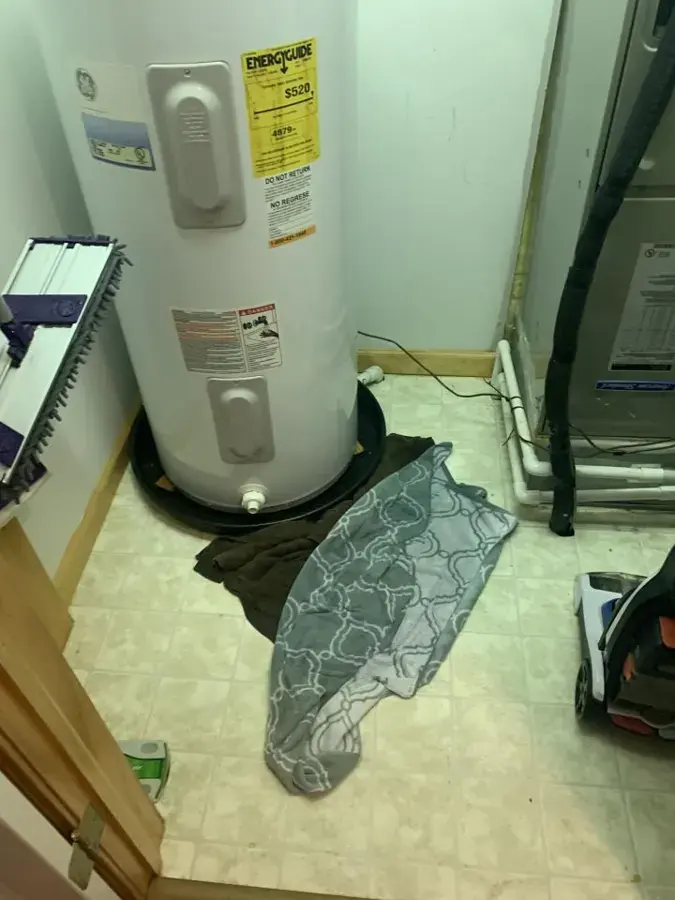
First moves when a water heater starts to leak
- 1
Cut the water
Close the cold-water valve above the tank, or the main if that valve will not turn.
- 2
Switch off the heat
Turn off the breaker for an electric unit, or set a gas unit to off, only from dry footing.
- 3
Look above and beside
Check the ceiling under an attic tank and the wall behind a closet unit for hidden water.
- 4
Photograph the tank
Capture the model label, the leak and the wet floor before towels and mops move anything.
A failing tank empties fast and spreads wide
A tank can release its whole volume in minutes, then keep dripping from fittings. The water follows the floor to the nearest wall or doorway and soaks drywall bottoms on the way.
- Water category
- Category 1 clean water, unless it sat for days
- Typical class
- Class 2 to 3 in drywall, trim, subfloor and ceilings below an attic unit
- Equipment
- Extraction units, pinless meters, air movers, LGR dehumidifiers
- Drying goal
- Walls and subfloor read within 2 to 4 points of dry
Hendersonville water is reported as hard, and hard water scales tanks and fixtures over time. With a median home built about 1989, many original tanks are near the end of their working life. A leak at the base of the tank or at a fitting can run quietly into a wall before anyone sees a puddle.
Where a water heater leak spreads
A garage tank sends water across the slab and into the shared wall of the house. A closet unit soaks flooring and baseboard and can run beneath the floor. A tank in the attic is the worst case, because the water drops through the ceiling into the rooms below.
- Garage: water crosses the slab and wicks into the bottom of the wall.
- Closet: flooring, trim and the wall behind it all get wet.
- Attic: insulation soaks and the ceiling underneath begins to sag.
Tank leaking into the house right now?
(888) 849-5796Call about the water heaterPermits and the replacement tank
Replacing a water heater in Hendersonville takes a plumbing permit, plus a mechanical permit when the unit is gas-fired. The plumber handles that side. The restoration team dries the damage around the old tank and keeps working while the new one goes in. The old tank's label and the leak photos should be kept for the adjuster.
Drying around the tank
After extraction, the drying team opens wall bottoms where readings stay high and runs air movers and LGR dehumidifiers until the numbers fall. Humid summers near the lake slow evaporation, so equipment often stays longer than the surface suggests. When the water went through a ceiling, the work follows the ceiling leak water damage steps, and a drip behind a kitchen or laundry unit is covered under appliance leak water damage. Standing water on the floor is handled as water extraction in Hendersonville. Mount Juliet homes follow the same method on the water heater leak cleanup page.
What does water heater leak cleanup cost in Hendersonville, TN?
In Hendersonville, TN, water heater leak cleanup commonly runs $600 to $4,500, before the new tank. A garage leak on a slab sits low, while an attic tank that soaked a ceiling and the rooms below sits near the top.
Garage slab
$600 to $1,500
- Water extracted
- Shared wall checked
- Brief equipment stay
Closet tank
$1,500 to $3,000
- Flooring and trim pulled
- Wall bottoms dried
- Floor below probed
Attic tank
$3,000 to $4,500+
- Ceiling opened below
- Insulation removed
- Two levels dried
Where the tank sits, how long it leaked and how far the water ran into walls, flooring and ceilings below move the price. Run the numbers in the water damage cost calculator.
How water heater leak cleanup is handled in Hendersonville
- 1
Extract
Standing water is pulled from the floor around the tank.
- 2
Map the spread
Meters and thermal imaging show where water entered walls, flooring and ceilings.
- 3
Open and dry
Wall bottoms and wet materials are opened as needed and dried with air movers and dehumidifiers.
- 4
Check and record
Daily readings and photos continue until the numbers match a dry spot.
Coverage across Hendersonville, TN
The Hendersonville water damage pros cover ZIP codes 37075 and 37077, from the lakefront streets of Indian Lake Peninsula and Sterling Cove to Cherokee Woods, Walton Ferry and the newer Station Camp area.
See every area servedWater heater leak questions from Hendersonville homeowners
Why do water heaters fail early in Hendersonville?
Hendersonville water is reported as hard, and scale builds inside tanks and around fittings. Over the years that wears the tank and the valves, so older units tend to fail more often.
Does replacing the tank need a permit?
Yes. The city requires a plumbing permit to replace a water heater, plus a mechanical permit for a gas-fired unit. The plumber normally handles it, and the restoration team dries the damage.
What if the tank is in the attic?
Attic leaks are the most damaging, because water soaks the insulation and drops through the ceiling. Keep clear of any sagging drywall below and shut off the water to the tank.
Is water on a garage slab a problem?
It is usually the easiest to extract, but it can wick into the bottom of the house wall. Readings on that shared wall decide whether any drywall comes off.
Is a leaking water heater covered by insurance?
A sudden tank failure is often covered for the water damage, though not always for the tank itself. Wear and slow leaks may be treated differently, so ask the insurer and photograph everything.
How do I know when the drying is done?
Moisture readings on the walls and subfloor tell it. Equipment leaves when those numbers match a dry spot, not when the surface looks clear.
Water heater leaking in Hendersonville?
The restoration team extracts the water, finds how far it spread and dries walls, floors and ceilings until readings match a dry spot.