Water Extraction in Goodlettsville, TN
When heavy rain pushes water up in the Mansker Creek bottoms or a supply pipe floods a floor, standing water has to leave the building quickly. The extraction crew pumps out rooms and low spots, then maps what remains so drying equipment goes in the right places.
(888) 849-5796Water standing now? Call about extraction- 24/7 dispatch
- Truck-mounted pumping
- Mapping before drying
- Goal based dry-out
First moves when water is standing in a Goodlettsville home
- 1
Stop the supply
Shut the main valve if a pipe is feeding the water, then leave rising outdoor water alone.
- 2
Stay out of the deep part
Keep clear of standing water near outlets, cords and the furnace until the power is confirmed off.
- 3
Record the water mark
Photograph the depth on walls and furniture before anything moves, because the mark disappears once pumping starts.
- 4
Lift what can come up
Raise cushions, boxes and rugs onto dry surfaces, but leave heavy furniture where it is.
Why standing water cannot wait near the creek bottoms
Around Long Hollow Pike and the Mansker Creek bottoms, water rises fast in heavy rain. Every hour it sits, more of it wicks into drywall, carpet pad and subfloor.
- Water category
- Category 1 from a supply pipe, Category 3 when creek water or sewage is involved
- Typical class
- Class 2 for wet carpet and wall bottoms, Class 3 from above
- Equipment
- Truck-mounted extractor, submersible pumps, air movers and LGR dehumidifiers
- Done when
- Standing water is gone and every wet material matches a dry reference
Goodlettsville sits across the Davidson and Sumner county line, and the creek bottoms around Mansker Creek and Long Hollow Pike are where water arrives fastest. A supply pipe can flood a floor just as quickly in any subdivision, from Windsor Green to Copper Creek, and a leak in an apartment near Rivergate can pour into the unit below. Either way the first priority is the same: get the water out before it settles into the structure.
What the extraction crew does first
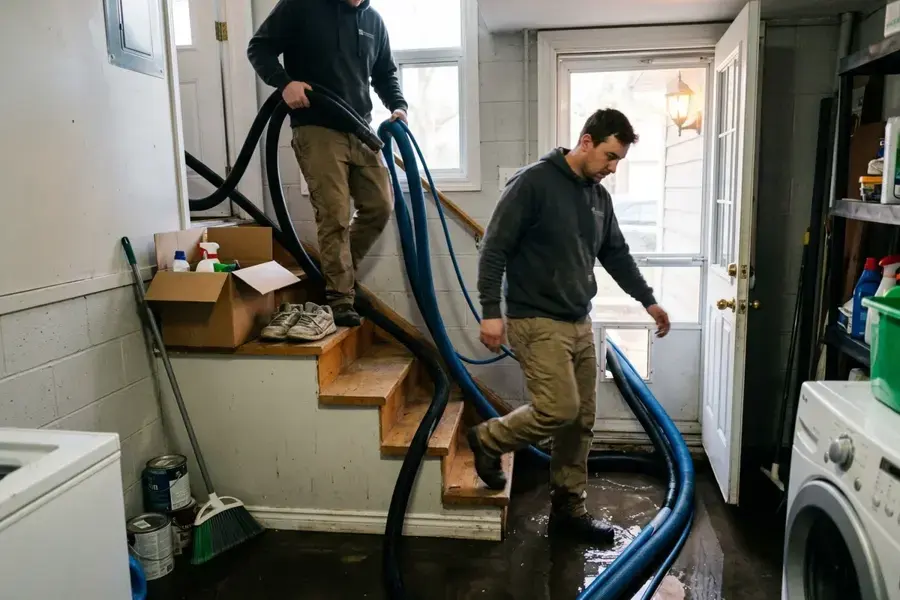
Before the pumps start, the walkthrough tech checks where the water came from, because the source sets the category. Truck-mounted equipment pulls water off hard floors, and weighted tools draw it out of carpet and pad. Submersible pumps handle deeper pooling in garages and low rooms. Loose items are moved out of the pumping path so hoses can reach the lowest corners.
Get the water out before it spreads
(888) 849-5796Call about extractionWhy pulling water is only half the job
Extraction removes what can be pumped, but drywall, subfloor and framing still hold moisture after the puddles are gone. Meters and thermal imaging locate those spots, and the drying team sets equipment against them. Read about structural drying in Goodlettsville to see how that stage is verified.
- Carpet pad is usually lifted, since it holds water against the subfloor.
- Wall bottoms are checked with a meter before any baseboard comes off.
- Furniture legs are blocked so wet carpet does not stain them.
- Subfloor is probed for hidden pockets once the surface water is gone.
When creek water is the source
Water that rose from Mansker Creek or Dry Fork Creek is Category 3, so the crew works in protective gear and porous materials such as pad come out instead of drying. The storm and flood cleanup page covers that path, and the Goodlettsville hub lists every other service.
What does water extraction cost in Goodlettsville, TN?
In Goodlettsville, TN, water extraction and the first round of drying typically run $450 to $4,500. One wet room with clean water sits at the low end; deep or dirty water in several rooms, with soaked pad and a low area to clear, sits at the top.
One room
$450 to $1,200
- Clean supply water
- Pad lifted
- First drying round
Several rooms
$1,200 to $3,000
- More pumping hours
- Wall bottoms checked
- Extra equipment
Deep or dirty water
$3,000 to $4,500+
- Category 3 protocol
- Porous items removed
- Longer drying
Cost follows the water category, how many rooms are wet, whether pad or an underfloor space took water and how soon pumping began. Run the numbers in the water damage cost calculator.
How water extraction is handled in Goodlettsville
- 1
Check the source
The walkthrough tech identifies the water and its category before a hose is placed.
- 2
Pump the low points
Truck-mounted units and submersible pumps clear rooms, garages and low spots.
- 3
Pull what holds water
Soaked pad and loose materials come out so they stop feeding moisture into the floor.
- 4
Hand off to drying
Meter readings mark the wet edge and air movers and dehumidifiers go in against it.
Coverage across Goodlettsville, TN
The Goodlettsville water damage pros cover ZIP codes 37072 and 37070, from Windsor Green and Dry Creek Farms on the Davidson side to Copper Creek and Braxton Park at Woodwyn in Sumner County.
See every area servedWater extraction questions from Goodlettsville homeowners
Why does water rise so fast near the Mansker Creek bottoms?
Low subdivisions near Long Hollow Pike and the creek bottoms see fast water rise in heavy rain. Dry Fork Creek is a flood source too, so a quick pump-out and a dry-out plan matter in those areas.
Can I use a wet vacuum instead of calling?
A shop vacuum clears a small spill but not water held in pad, subfloor and wall bottoms. Hidden moisture is what causes odor and swelling later, so readings still need to be taken.
Is the water safe to touch?
Clean supply water is lower risk. Creek water and anything touching sewage is Category 3, so wear boots and gloves, keep children and pets away and leave the pumping to trained crews.
What happens after the water is gone?
The drying team places air movers and LGR dehumidifiers, logs readings each day and removes equipment only when wet materials match a dry reference in the same house.
Will insurance cover extraction?
A burst pipe is sudden discharge, while rising creek water is usually a flood loss that needs separate coverage. Your policy decides, so ask your own insurer and keep the moisture map.
Standing water in your Goodlettsville home?
The extraction crew pumps the rooms, pulls what holds water and sets drying equipment against the mapped wet edge.