Hardwood Floor Water Damage in Lebanon, TN
Older homes in Lebanon's historic districts often keep their original hardwood, and humid subtropical air with about 54 inches of rain a year can cup a floor that gets wet. The drying team catches it early with mats and readings, so boards can be pulled back before they are written off.
(888) 849-5796Wood floor wet? Call about drying- 24/7 dispatch
- Drying mat systems
- Board moisture readings
- Crawl space checks
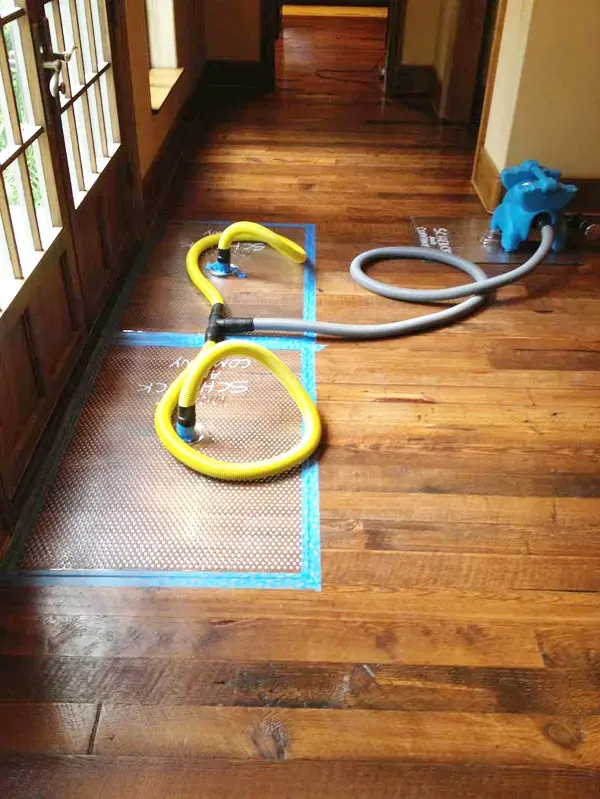
What to do when a wood floor gets wet
- 1
Stop the water
Close the main or the appliance valve so the source stops feeding the floor.
- 2
Clear what you can
Mop or vacuum standing water, and lift rugs and furniture off the boards.
- 3
Skip the space heater
Heat aimed at the surface dries the top of a board while the bottom stays wet.
- 4
Photograph the boards
Capture cupping, gaps and stains, with the date, before anything is moved.
Why wood cups when it gets wet
Wood swells as it absorbs water, and the underside of a board stays wet longer than the top. The edges curl up first, which is the cupping that shows.
- Water category
- Category 1 from a pipe or appliance, Category 3 from flood
- Typical class
- Class 2 to 4, since dense hardwood absorbs and releases slowly
- Equipment
- Floor drying mats, desiccant dehumidifiers, air movers, wood moisture meters
- Drying goal
- Boards within 2 to 4 points of a dry reference
East Spring Street has some of Lebanon's oldest residences, including 1900s Craftsman bungalows, and the Greenlawn, West Main Street and Castle Heights areas add Colonial Revival and Tudor Revival houses. Original hardwood in homes like these is worth saving, and it dries best when the work starts early.
Cupping, crowning and buckling
Wood warps in three ways, and each one tells the crew how long the floor has been wet.
- Cupping: the edges of each board curl up while the underside stays wet.
- Crowning: the center rises, often after a cupped floor is sanded too soon.
- Buckling: boards lift off the subfloor, a sign of serious water.
Get the wood floor drying now
(888) 849-5796Call about a wet floorHow the drying team saves a floor
Floor drying mats are panels set over the boards that pull moisture upward under suction, while dehumidifiers dry the air above. The crew reads each board with a moisture meter and adjusts the equipment day by day. Humid subtropical summers slow evaporation, so equipment may need to stay longer than expected, and readings, not appearance, decide when it leaves.
Where the water usually comes from
Most wet hardwood in Lebanon starts with an appliance leak, a split pipe or storm water. A floor over a crawl space can also be dampened from below, so the space is checked; see crawl space water damage. Kitchen leaks follow appliance leak water damage, and a soaked structure moves on to structural drying.
Refinishing comes last
Sanding and refinishing wait until the floor reads dry, which can be weeks after the event. Finishing too soon traps moisture and can cause crowning. The drying team documents the readings so the floor contractor knows when it is safe to start.
What the readings decide
A board can look flat and still be wet inside, so the crew reads the wood at marked spots every day and compares it with a dry sample. Those numbers decide when the mats come up, whether any boards must be replaced and when the floor is ready for the next trade.
What does hardwood floor water damage cost in Lebanon, TN?
In Lebanon, TN, hardwood floor drying typically runs $1,000 to $6,000, depending on the square footage of wet boards, how long they stayed wet and whether the water reached the subfloor, the crawl space or the level below.
Small area
$1,000 to $2,000
- One section of floor
- Mats and meters
- Short drying
Room or more
$2,000 to $4,000
- Several rooms of boards
- Subfloor readings
- Added equipment days
Main floor and below
$4,000 to $6,000+
- Whole floor wet
- Crawl space or ceiling affected
- Long drying
Cost follows how many square feet of boards got wet, how long they stayed wet and whether the subfloor needed drying. Run the numbers in the water damage cost calculator.
How hardwood floor water damage is handled in Lebanon
- 1
Map the wet boards
Meters and thermal imaging show how far the water traveled beneath the floor.
- 2
Extract and prepare
Standing water is pulled and the floor is cleared of rugs and furniture.
- 3
Set the drying mats
Panels go over the boards and dehumidifiers run around them.
- 4
Read and verify
Boards are read daily until they match a dry reference.
Coverage across Lebanon, TN
The Lebanon water damage pros cover ZIP codes 37087 and 37090, from the Lebanon Square and the historic districts to Villages of Hunters Point, Coles Ferry Village and the townhomes off Castle Heights Avenue.
See every area servedHardwood floor questions in Lebanon
Can a cupped hardwood floor be saved?
Often yes if drying starts quickly. Mats and dehumidifiers pull the moisture out, and many cupped boards flatten as they dry. Boards that buckle or rot may need replacing.
Should I wait for the floor to dry on its own?
No. Wood that stays wet swells, stains and can grow mold. Active drying with mats and dehumidifiers is faster and protects more of the floor.
Why does the crew check the crawl space?
A wet crawl space can keep sending moisture up into the subfloor and the boards. The space is read and dried so the floor does not re-wet from below.
How long does a hardwood floor take to dry?
Often a week or more, since hardwood is a dense Class 4 material. Humid summers slow it, and readings decide when equipment leaves.
Can the floor be refinished afterward?
Yes, once it reads dry. Refinishing too soon can trap moisture, so the drying readings are shared with the floor contractor.
Will insurance cover wet hardwood?
A sudden leak is often covered after the deductible, while slow seepage can be handled differently. Check your own policy with your insurer.
Wet hardwood in your Lebanon home?
The drying team sets mats, reads the boards daily and keeps equipment running until the floor matches a dry reference.