Burst Pipe Water Damage in Lebanon, TN
Winter highs near 47 F look mild, yet hard freeze nights still reach exposed supply pipes in crawl spaces, attics and outside walls. When one splits, water pours into insulation and drywall until someone finds the main. The mitigation team extracts it, opens the wet cavity and dries it to a measured goal.
(888) 849-5796Pipe split? Shut the main and call- 24/7 dispatch
- Wall cavity drying
- Pipe leak mapping
- Readings every day
What to do the moment a pipe splits
- 1
Find the main
Shut the main valve first. It is often in a garage, a utility closet or near the crawl space door.
- 2
Open the taps
With the main closed, open a faucet to drain whatever is left in the pipes.
- 3
Power down wet areas
Switch off breakers for wet rooms only if the panel area is dry.
- 4
Photograph and clear
Capture the split and each wet area, then lift belongings off the floor.
Why a split pipe soaks more than the floor
Water from a burst pipe runs down inside the wall and into insulation, so the hidden cavity is wetter than the surface suggests. Drying it directly prevents swelling later.
- Water category
- Category 1 from a clean supply pipe, if caught early
- Typical class
- Class 2, with walls and floors wet
- Equipment
- Thermal camera, pinless meters, air movers, LGR dehumidifiers, cavity drying system
- Drying goal
- Wall cavities and floors within 2 to 4 points of a dry reference
Winter highs in Lebanon sit near 47 F, and hard freeze nights come often enough to split exposed supply pipes in crawl spaces and attics. Pipes can also fail at a fitting in any season, but freezing is the classic cause, and water often runs for a while before anyone notices.
Where pipes freeze in Lebanon homes
Older historic district houses are the most likely to have crawl spaces, where cold air can reach pipes under the floor. Attic runs in any home can freeze too when insulation is thin.
- Pipes under floors in vented crawl spaces.
- Runs inside exterior walls.
- Attic pipes where insulation is thin.
- Garage walls shared with the house.
Stop the pipe water from spreading
(888) 849-5796Call about a burst pipeHow the mitigation team handles a split pipe
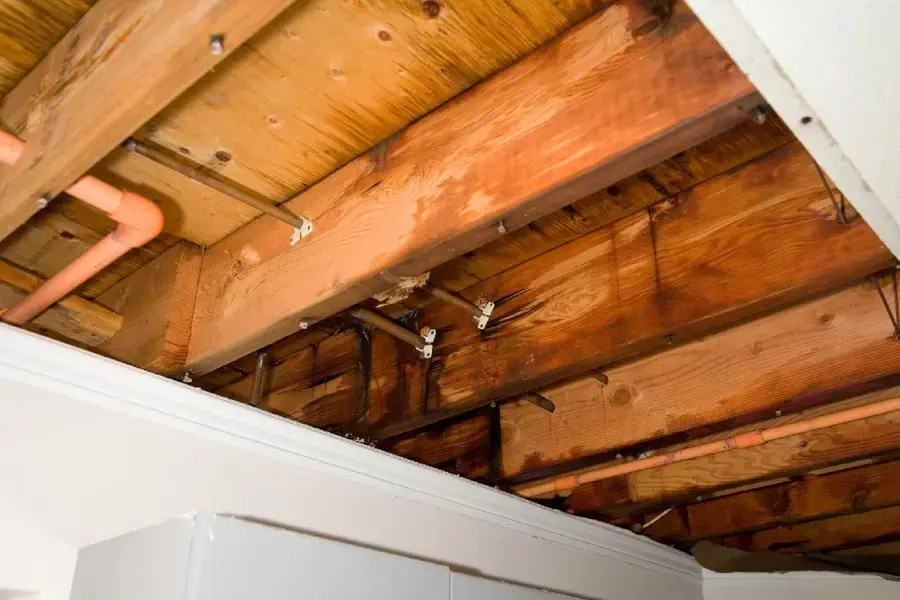
The plumber repairs or replaces the pipe. The mitigation team extracts standing water, then cuts small openings at the bottom of the wet wall so the cavity can dry. Thermal imaging and meters trace the water downward and sideways, since it often runs through the floor system into the room below. Air movers and LGR dehumidifiers then dry the cavity, and readings are logged every day.
Ceilings, floors and the level below
A split in an attic or upper floor soaks the ceiling underneath, which follows the ceiling leak water damage process. Water that reached the crawl space is handled as in crawl space water damage, and a wet wood floor falls under hardwood floor water damage. The wider picture sits on the Lebanon water damage page.
Preventing the next freeze
Insulating exposed pipes, keeping crawl space vents closed in a hard freeze and opening cabinet doors along outside walls all help. A faucet left dripping keeps water moving. Knowing where the main valve sits means the shutoff takes seconds when a pipe does split, and that speed is what limits the damage.
What does burst pipe water damage cost in Lebanon, TN?
In Lebanon, TN, burst pipe water damage restoration typically runs $1,200 to $8,000, not counting the plumbing repair. A single wet wall sits at the low end; a split that soaked a ceiling, a floor and the rooms below sits at the high end.
Single wall
$1,200 to $2,500
- One wall cavity
- Bottom openings cut
- Air movers and dehumidifier
Ceiling and floor
$2,500 to $5,000
- Two surfaces wet
- Insulation removed
- Several days of drying
Whole-wing loss
$5,000 to $8,000+
- Rooms on two levels
- Flooring affected
- Extended equipment runs
Cost follows how long the pipe ran, how many surfaces and levels got wet and how soon extraction began. Run the numbers in the water damage cost calculator.
How burst pipe water damage is handled in Lebanon
- 1
Stop and extract
The main is shut, and standing water is pulled out of rooms and low spaces.
- 2
Trace the path
Thermal imaging and meters follow water through walls, floors and ceilings.
- 3
Open the cavity
Small openings let air reach wet insulation, studs and bottom plates.
- 4
Dry and verify
Air movers and LGR dehumidifiers run until readings match a dry reference.
Coverage across Lebanon, TN
The Lebanon water damage pros cover ZIP codes 37087 and 37090, from the Lebanon Square and the historic districts to Villages of Hunters Point, Coles Ferry Village and the townhomes off Castle Heights Avenue.
See every area servedBurst pipe questions from Lebanon homeowners
Why do pipes freeze when highs are near 47 F?
Winter highs are only part of it. Hard freeze nights drop well below that, and pipes in crawl spaces, attics and outside walls get colder than the living space.
What should I do first when a pipe bursts?
Shut the main valve, open a faucet to drain the pipes, switch off breakers for wet rooms if the panel area is dry and photograph the damage before calling.
Does the wall have to be opened?
Often only a few inches at the bottom. Water collects there, and a small opening lets air and dehumidifiers dry the cavity instead of trapping moisture.
How long does drying take?
A contained Class 1 or Class 2 loss usually dries in three to five days. A split that soaked several levels takes longer, and the readings decide when equipment leaves.
Who repairs the pipe?
A plumber repairs or replaces it. The restoration team extracts water and dries the structure, and the two often work back to back.
Is a burst pipe covered by insurance?
A pipe that splits is usually a sudden and accidental discharge, which many policies treat differently from flood. Coverage depends on your policy, so check with your insurer.
Burst pipe in your Lebanon home?
The mitigation team extracts the water, opens the wet cavity and dries the framing until the readings match a dry reference.