Water Extraction in Lebanon, TN
Fast-rising creeks such as Sinking Creek, Town Creek and Spencer Creek, plus a 7-inch rain day in March 2021, leave standing water in downtown businesses and low-lying homes. The extraction crew pulls it out with truck-mounted equipment, then maps the moisture before it soaks into the subfloor.
(888) 849-5796Standing water? Call for extraction now- 24/7 dispatch
- Truck-mounted extraction
- Moisture mapping first
- IICRC S500 drying goal
What to do while water is still standing
- 1
Stop the source
Close the main valve for a pipe leak. For creek or storm water, stay out until it stops rising.
- 2
Respect the electricity
Leave breakers alone if the panel area is wet, and keep away from outlets and cords near standing water.
- 3
Lift what you can
Raise small furniture onto blocks and pull up rugs, but leave heavy contents for the crew.
- 4
Photograph before pumping
Record the water depth and wet items so the claim file starts with proof.
Why the liquid has to leave before drying starts
Dehumidifiers cannot work against inches of standing water. Extraction removes the bulk first, so drying equipment only has to handle moisture held inside the materials.
- Water category
- Category 1 from a broken pipe, Category 3 from creek water
- Typical class
- Class 2, with carpet, pad and wall bottoms wet
- Equipment
- Truck-mounted extractor, submersible pump, weighted extraction tool, moisture meters
- Drying goal
- Materials within 2 to 4 points of a dry reference
Every hour that water stands on a floor, more of it soaks into subfloor, baseboard and wall bottoms. In Lebanon the source can be a split pipe or a creek that left its banks, and the first job stays the same: get the liquid out of the building before it works its way into framing and flooring layers.
How truck-mounted extraction works
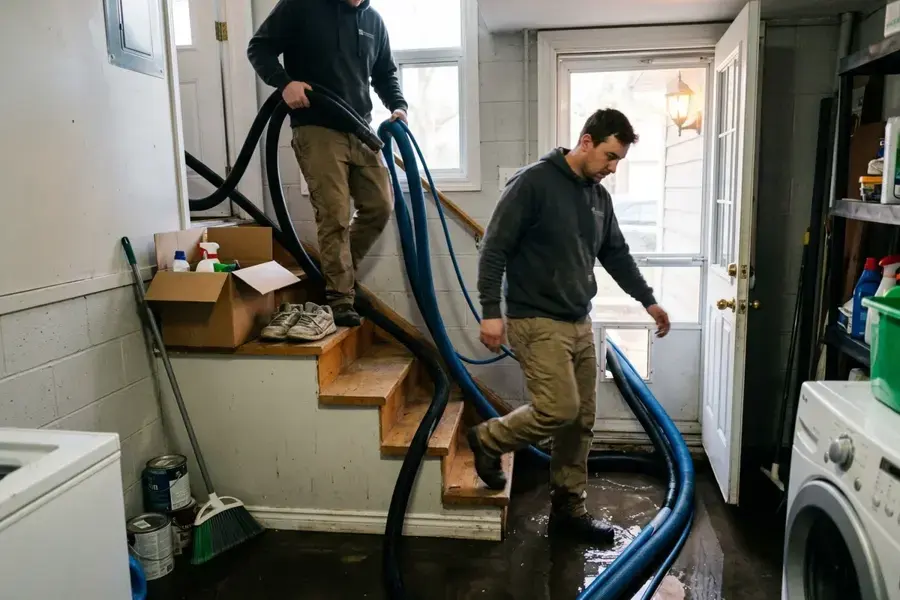
The extraction crew runs hoses from the truck to the loss, so the powerful vacuum stays outside and the water leaves the property instead of drifting to the next room. Weighted tools draw water from carpet and pad, and a submersible pump clears deeper water in a stairwell or crawl space. Water removed this way never has to be dried out of the structure later, which shortens the whole job.
Hoses are laid so they do not drag across wet carpet, and the crew protects furniture and trim along the route.
Get the standing water pumped out
(888) 849-5796Call for water extractionWhy the moisture map comes next
Water travels sideways under baseboards and into wall cavities, so a floor that looks dry can sit beside a wet wall. The tech maps the wet edge with thermal imaging and pinless meters, and that map decides where equipment goes and what has to be removed.
- Thermal imaging shows cool, wet zones behind finished surfaces.
- Pinless meters confirm which materials are actually holding water.
- Readings taken now become the baseline for the claim file.
- Wet areas are marked so later removal stays limited to what is wet.
When extraction turns into removal
Clean water from a split pipe can be dried in place when drying begins fast. Creek or sewage water is Category 3, so carpet, pad and lower drywall come out, as described under storm and flood cleanup in Lebanon. After the pump-out the job continues as structural drying, and a flooded foundation space follows the crawl space process.
What to expect on site
The extraction crew arrives with hoses, pumps and moisture meters, and checks for hazards before work starts. Water is pulled out, the wet edge is marked and the drying equipment is placed. Anything that cannot be saved is set aside and photographed for the claim file.
What does water extraction cost in Lebanon, TN?
In Lebanon, TN, water extraction and the first round of drying typically run $450 to $4,500, depending on how deep the water is, how many rooms it reached, whether the source was clean or contaminated and how fast pumping began.
One room
$450 to $1,200
- Single room of carpet or tile
- Pump-out and weighted tool
- First day of drying
Several rooms
$1,200 to $3,000
- Water in adjoining rooms
- Pad removed where soaked
- Added dehumidifiers
Deep or dirty water
$3,000 to $4,500+
- Stairwell or crawl space pumping
- Category 3 handling
- Removal before drying
Cost depends on water depth, the area covered, whether the source was clean or contaminated and how quickly pumping began. Run the numbers in the water damage cost calculator.
How water extraction is handled in Lebanon
- 1
Assess and protect
The crew checks hazards, shuts off the source and notes the water depth.
- 2
Extract the bulk water
Truck-mounted equipment and pumps remove liquid from floors and low spaces.
- 3
Map the moisture
Thermal imaging and meters mark the wet edge in walls, floors and ceilings.
- 4
Hand off to drying
Equipment is placed and daily readings start the move toward the dry goal.
Coverage across Lebanon, TN
The Lebanon water damage pros cover ZIP codes 37087 and 37090, from the Lebanon Square and the historic districts to Villages of Hunters Point, Coles Ferry Village and the townhomes off Castle Heights Avenue.
See every area servedWater extraction questions in Lebanon
How fast does extraction need to start?
As soon as water is standing. Every hour lets more soak into subfloor and wall bottoms, and clean water can turn dirtier the longer it sits.
Is extraction the same as drying?
No. Extraction removes liquid water. Drying then pulls the moisture held inside materials, using air movers and dehumidifiers until the readings meet the goal.
Why use truck-mounted equipment instead of a shop vacuum?
A truck-mounted unit moves far more water and sends it outside the building. A shop vacuum is slow, leaves water in padding and can push moisture into new areas.
Can carpet be saved after extraction?
Often yes when the water was clean and extraction started fast, though the pad underneath is usually replaced. Carpet soaked by creek water or sewage is removed.
Does the crawl space get pumped too?
If water reached the foundation space, yes. A pump clears it and the vapor barrier is checked, because that water keeps humidity rising into the floor above.
What if creek water caused the loss?
It is treated as Category 3. Extraction still comes first, followed by removal of porous materials, antimicrobial treatment and structural drying.
Standing water in your Lebanon property?
The extraction crew pulls the water out, maps the moisture and sets the drying equipment before the subfloor can soak it up.